
Your Ultimate Guide to Ecotourism Adventures
Let’s be honest, “ecotourism” is a word that gets thrown around a lot. At its core, it’s about responsible travel to natural areas that conserves the environment, sustains the well-being of the local people, and involves a healthy dose of wonder and education.
It’s an active, positive force for good—turning your vacation into a tool that helps protect the very places you’ve come to see. Think of us as your adventure architects, ready to build a trip that’s not just unforgettable, but genuinely world-changing.
What Ecotourism Really Means for Your Travels
Forget the dry, academic definitions for a second. Think of ecotourism as travel with a superpower. It’s the difference between simply looking at a beautiful coral reef and knowing your visit helps fund its protection from bleaching. It’s so much more than a nature walk; it’s an entire philosophy that actively improves the destinations we cherish.
Imagine your vacation dollars directly supporting a local artisan’s family, funding a rainforest conservation project, or helping protect endangered sea turtles. That’s the magic we’re talking about. We’re here to make that happen for you, creating a trip that’s not just fun but profoundly fulfilling.
The Three Pillars of Ecotourism
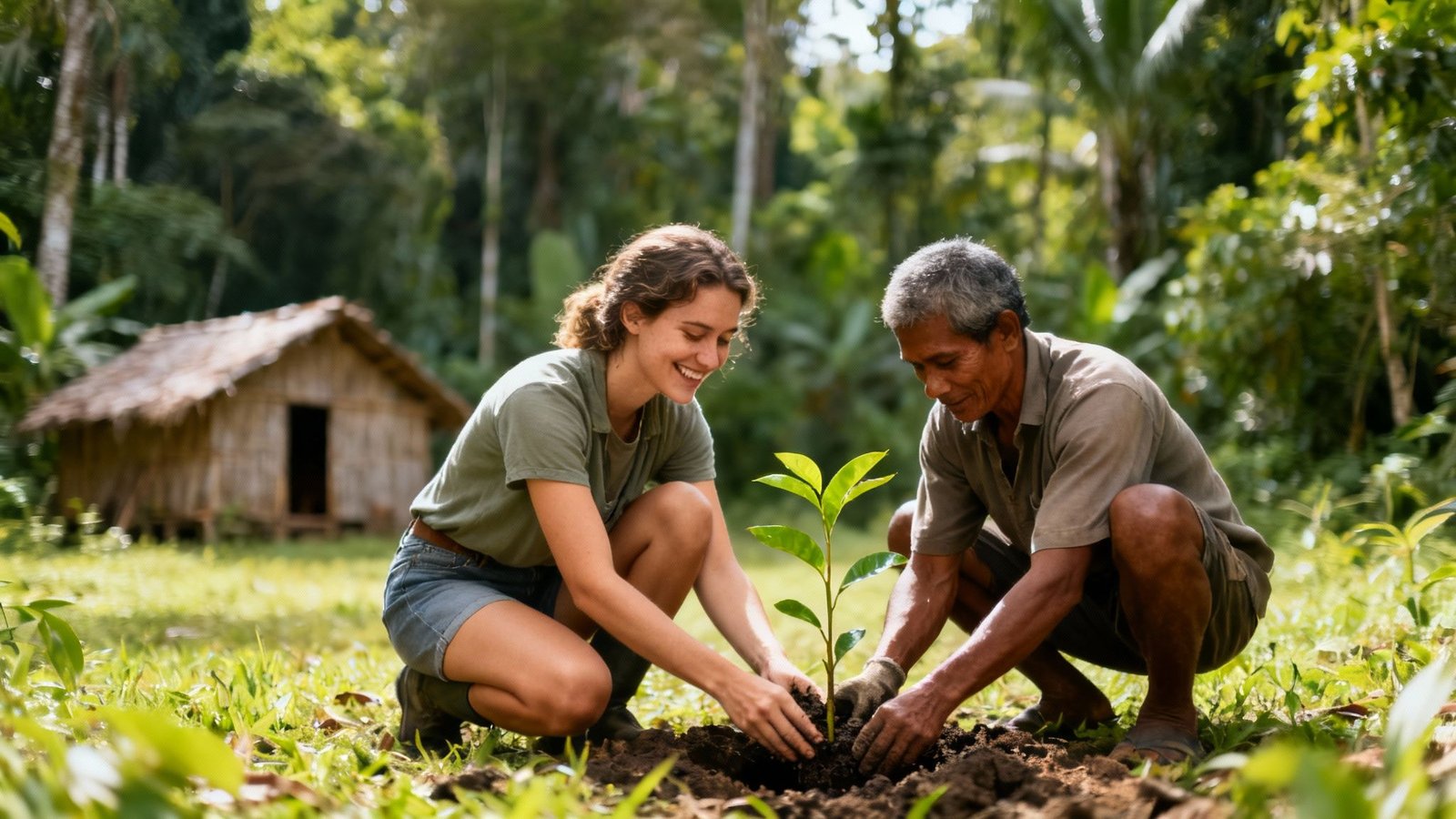
Genuine ecotourism stands firmly on three core principles. It’s a balanced approach where conservation, community, and education work together. I like to think of it as a three-legged stool—if one leg is weak, the whole thing topples over.
Here’s what these pillars look like in the real world:
- Conservation: This one’s the most obvious. It means actively protecting the natural environment. This could be anything from staying at a jungle lodge that runs on solar power, participating in a beach cleanup, or choosing a tour operator that contributes a portion of its profits to wildlife preservation. It’s all about minimizing your footprint and maximizing your positive impact.
- Community: True ecotourism empowers local people. It ensures that the economic benefits of tourism actually stay within the community. This means hiring local guides, eating at family-owned restaurants, and buying handcrafted souvenirs directly from artisans. When a community thrives from protecting its natural resources, it becomes the most passionate guardian of those resources.
- Education: This pillar is all about fostering a deeper connection and understanding. Your trip becomes an immersive learning experience, not just a photo op. A great eco-tour always includes interpretation from a knowledgeable local guide who can share insights about the ecosystem, wildlife behavior, and cultural traditions. You return home with more than just souvenirs—you return with a new perspective.
The goal is simple but powerful: To leave a place better than you found it. Ecotourism isn’t about restriction; it’s about connection, respect, and creating a cycle of positive impact that benefits everyone involved—the traveler, the host community, and the planet itself.
An Ecotourism Adventure in Action
So, what does this actually look like on the ground? Let’s paint a quick picture of a trip to Costa Rica we could whip up for you.
Your adventure begins at a small, community-owned lodge nestled in the Monteverde Cloud Forest. The lodge itself is built from sustainably harvested wood, and your meals are prepared with organic ingredients grown in its on-site garden. Simple, but impactful.
Your morning activity isn’t just another zip-line tour; it’s led by a naturalist guide who grew up in the area. As you soar through the canopy, he points out a sleeping sloth and explains how the unique microclimate supports thousands of plant species. The fee for your tour directly funds local reforestation efforts, helping to expand this vital habitat.
Later, you visit a local coffee cooperative where you learn about shade-grown coffee from the farmers themselves. You share a meal with the family, hearing stories about their cultural heritage. By choosing this experience, you’ve supported a local business that practices sustainable agriculture.
This is ecotourism—an exciting, engaging adventure that makes a real, measurable difference.
How Your Travels Can Change The World
Ever ask yourself if one single vacation can really make a difference? It’s a fair question, and one I get a lot. The answer is a huge, resounding yes. When you choose to travel with intention—what we call ecotourism—your vacation spending becomes a powerful tool. It directly funds wildlife conservation, creates stable local jobs, and helps keep precious cultural traditions alive.
This isn’t just about feeling good on vacation; it’s about actively doing good. Your choices create a ripple effect, making a real, positive impact that lasts long after you’ve unpacked your bags. Let’s break down how your next trip can be a part of this global movement.
Fueling Conservation One Adventure at a Time
Picture this: you’re in Guyana’s Iwokrama Forest, gliding down the Essequibo River in a small boat. Your local guide, someone who grew up just miles away, points out a family of red howler monkeys chattering in the canopy above. The fee you paid for that incredible moment doesn’t just line an operator’s pocket. It helps pay the salaries of the very rangers who protect this forest from illegal logging.
That’s the direct impact of ecotourism. Your presence provides a real, sustainable economic alternative to destructive industries like logging or mining. It proves that a living, breathing forest is infinitely more valuable than a clear-cut one.
The benefits are even bigger than that. Protected areas supported by ecotourism store roughly 15% of the world’s terrestrial carbon stock, acting as massive carbon sinks in the fight against climate change. In Peru alone, these areas lock away a staggering 5.6 billion tons of carbon. And get this: while the tourism industry makes up about 10% of global GDP, it’s responsible for only about 8% of global greenhouse gas emissions. That’s a pretty efficient trade-off.
Empowering Communities and Local Economies
Now, imagine you’re in a tiny village in Costa Rica. Instead of a massive, foreign-owned resort complex, you’re staying in a charming, family-run eco-lodge. The money you spend on your room and those incredible, locally sourced meals goes right back into the community.
This creates a powerful cycle. Locals see that protecting their environment and sharing their culture leads directly to stable jobs and a brighter future for their kids. Suddenly, they become the most passionate guardians of their own natural and cultural treasures. Here’s what that looks like on the ground:
- Hiring local guides: Your tour is led by someone with generations of knowledge, offering stories and insights you’d never get from a guidebook.
- Supporting local artisans: You buy handcrafted souvenirs directly from the person who made them, ensuring they get paid fairly for their incredible skill.
- Dining at local eateries: You’re not just eating authentic food at a family-owned spot; you’re keeping money circulating right where it’s needed most.
When you travel this way, you’re not just a tourist passing through. You become a partner in sustainable development, actively investing in the people and places that make your trip unforgettable.
A Whimsical Itinerary That Makes a Difference
Let’s make this tangible. Here’s a little taste of what a world-changing trip could actually look like:
A 3-Day Eco-Escape to the Cloud Forest:
- Day 1: Arrival and Jungle Lullabies. Settle into your community-owned jungle lodge. Your first mission, should you choose to accept it: a guided night walk where your local expert helps you spot sleeping birds, shy armadillos, and nearly invisible glass frogs, all while whispering their secrets.
- Day 2: Canopy and Culture. The morning is for flying! Soar on a thrilling zip-line tour through the canopy, knowing a piece of your ticket price goes toward local reforestation projects. In the afternoon, visit a women-led coffee cooperative to learn about shade-grown coffee, a practice that keeps migratory birds happy.
- Day 3: Waterfalls and Wonder. Hike to a series of breathtaking waterfalls and take a dip in the crystal-clear pools. Along the way, your guide shares local legends tied to the landscape, connecting you deeply to the region’s cultural story before we whisk you back to reality.
This kind of travel is more than just exciting—it’s deeply rewarding. It’s a perfect blend of adventure and restoration, something we’re passionate about. You can find more ideas for restorative journeys in our guide to wellness travel. At Those Who Wander, we live for crafting these kinds of meaningful experiences. Just tell us your dream, and we’ll handle all the details.
Spotting Authentic Ecotourism from Greenwashing
In a world where “eco-friendly” is slapped onto everything from water bottles to luxury resorts, how can you be sure your dream trip is the real deal? The line between authentic ecotourism and clever marketing—a sneaky practice we call greenwashing—can feel blurry. But don’t worry, we’re here to hand you a special pair of decoder glasses.
Making an informed choice isn’t about becoming a detective overnight; it’s about knowing what questions to ask and what details matter. Genuine operators are proud of their commitment and are usually more than happy to talk your ear off about it. Think of this section as your field guide to confidently telling a true eco-adventure from a well-disguised fake, ensuring your travel dollars support real, positive change..
This simple decision-making guide illustrates how to choose impactful and protective travel options.
This visual journey emphasizes that every choice, from the destination you pick to the activities you book, contributes to a larger impact that either helps or harms local ecosystems and communities.
Decoding Certifications: What Do They Mean?
Think of certifications as a shorthand for sustainability. They are third-party seals of approval that verify a business is actually walking the walk. While no single certification is perfect, they are a fantastic starting point for your research.
Here are a few of the most respected labels you might run into:
- B Corp Certification: This one’s a big deal. It means a company meets incredibly high standards of social and environmental performance, accountability, and transparency. It’s not just about the product; it’s about the entire business being a force for good.
- Green Globe: This is a global certification specifically for the travel industry. To earn it, a business has to prove its long-term commitment to sustainable management, real social and economic benefits for the community, cultural heritage preservation, and environmental protection.
- Rainforest Alliance Certified™: You might see this little green frog on everything from hotels to the coffee they serve. It signifies that the business is working to conserve biodiversity and ensure sustainable livelihoods by changing how they operate from the ground up.
These labels aren’t just fancy logos. They represent a serious commitment and a ton of hard work happening behind the scenes.
The Telltale Signs of Greenwashing
So, what exactly is greenwashing? It’s the frustrating practice of making misleading claims about the environmental benefits of a product or company. It’s designed to make you feel like you’re making an eco-conscious choice, all without the company having to do the real, often difficult, work.
The core problem with greenwashing is that it preys on your good intentions. It diverts money away from genuinely sustainable businesses and creates cynicism, making it harder for travelers to trust anyone at all.
So, how do you spot it in the wild? Keep an eye out for these red flags:
- Vague and Fluffy Language: Beware of buzzwords like “green,” “eco-friendly,” or “natural” without any specifics to back them up. If an operator can’t tell you how they are eco-friendly, they probably aren’t.
- Focusing on a Single “Green” Thing: A resort might boast about ditching plastic straws while ignoring massive issues like improper waste disposal or exploitative labor practices. True sustainability is holistic.
- Exploitative Animal Encounters: This is a huge red flag. Any experience that involves riding wild animals (like elephants), holding them for photos, or watching them perform unnatural tricks is unethical and is absolutely not ecotourism.
Your Pre-Booking Checklist
Feeling empowered? Good. Now, let’s put that knowledge into action. Before you click “book,” take a moment to ask some direct questions. A truly sustainable operator will be thrilled you asked.
Here’s a quick-reference guide to help you distinguish between genuine sustainable operators and those just using eco-buzzwords.
Authentic Eco-Practices vs. Greenwashing Red Flags
| The Real Deal (What to Look For) | Greenwashing Alert (What to Avoid) |
|---|---|
| Specifics: They detail how they reduce water/energy use. | Vagueness: They just say they are “eco-friendly.” |
| Local Hiring: Guides and staff are from the local community. | Foreign Staff: Most high-level positions are held by expats. |
| Transparency: They publish a clear sustainability policy online. | Hidden Info: You can’t find any concrete environmental policies. |
| Respectful Wildlife: Viewing is from a distance with no contact. | Hands-On Animals: Offers riding, holding, or bathing wildlife. |
| Community Benefits: They can explain how your tour helps locals. | No Clear Impact: It’s unclear where your money is actually going. |
By using this toolkit, you can cut through the marketing noise and find those amazing, authentic travel experiences that truly make a difference.
Here at Those Who Wander, we’ve already done this homework for you. We partner only with operators who share our deep commitment to ethical and impactful travel, making sure your adventure is as good for the planet as it is for your soul.
Ready for an Adventure? Ecotourism Itineraries to Get You Started
Alright, let’s move from theory to reality. The best way to really get ecotourism is to see it in action. So, if you’re ready to stop dreaming and start doing, we’ve put together a few ideas to show you just how incredible a purpose-driven trip can be.
Think of these less as cookie-cutter vacation packages and more as blueprints for making memories that actually mean something. We’re like adventure architects—we sort out the nitty-gritty so you can soak in the pure, unfiltered joy of the experience.
For the Family: A Costa Rican “Pura Vida” Adventure
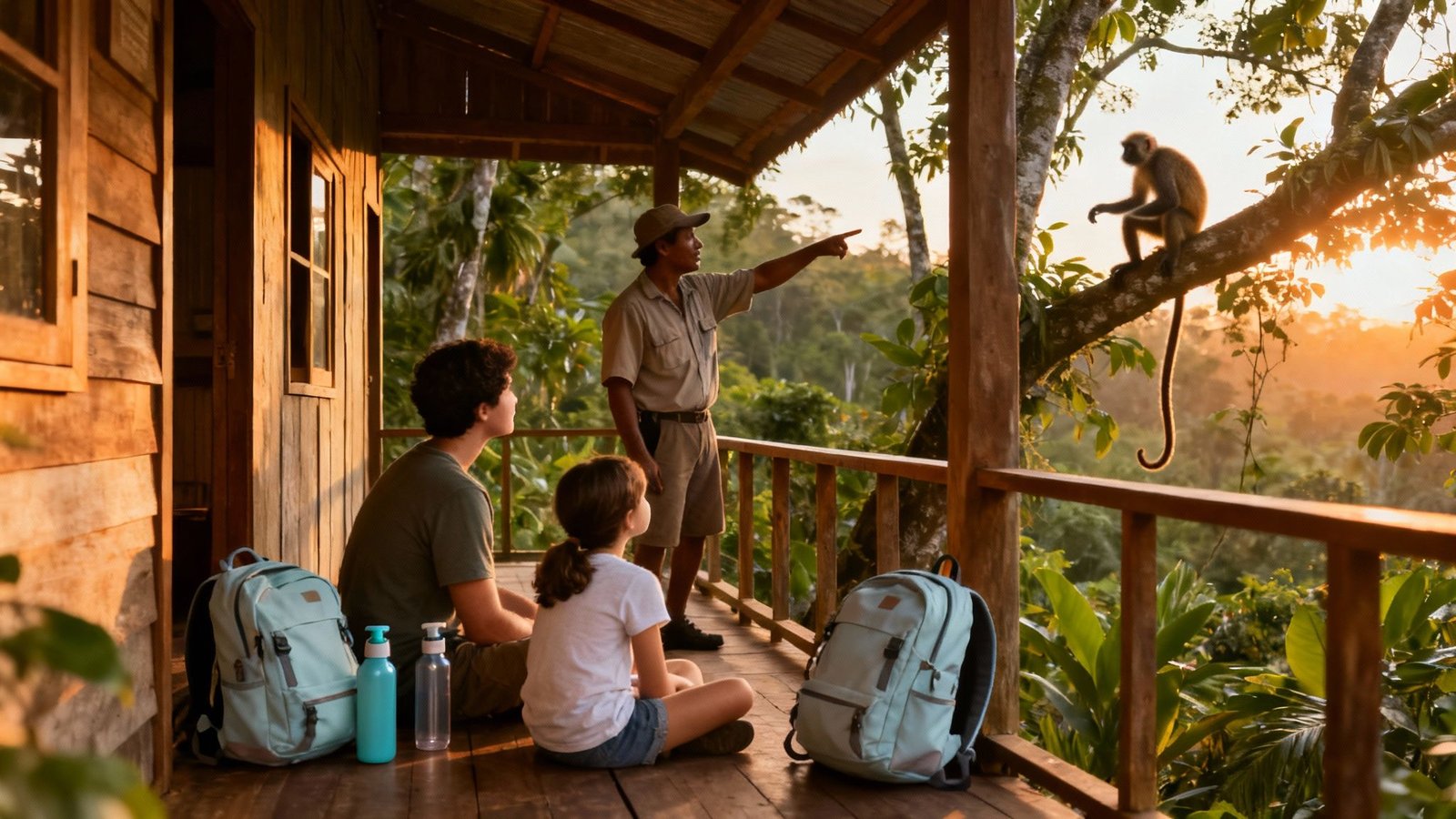
Costa Rica basically wrote the book on ecotourism, making it the perfect living classroom for a family trip. This 7-day itinerary is a fantastic mix of wildlife wonders and hands-on fun that will have both kids and adults totally hooked.
Your 7-Day Game Plan:
- Days 1-2: Welcome to the Jungle. We’ll have you settled into a community-owned jungle lodge near the Arenal Volcano in no time. Your first mission? A guided night walk with a local naturalist to spot sleepy sloths, shy armadillos, and nearly invisible glass frogs.
- Days 3-4: Canopy & Coffee. Time to get a bird’s-eye view. Soar through the Monteverde Cloud Forest canopy on a zip-line tour run by a certified B Corp. Later, you’ll visit a women-led coffee cooperative to learn about shade-grown coffee—a method that protects vital habitats for migratory birds.
- Days 5-6: Pacific Coast Conservation. We’ll whisk you over to the Pacific coast to get involved with a sea turtle conservation project (seasonal). Your family can help protect nests and learn all about the life cycle of these amazing creatures from local biologists.
- Day 7: A Purposeful Departure. Enjoy one last breakfast of fresh tropical fruit before heading home, armed with incredible stories and a much deeper connection to the natural world.
For Friends: Iceland, the Land of Fire & Ice
Get the crew together for an epic journey through Iceland’s wild, dramatic landscapes. This trip is built for friends who want to experience raw nature while actively supporting the initiatives working to protect this fragile environment.
Your 7-Day Game Plan:
- Days 1-2: The Golden Circle, but Cooler. You’ll hit the iconic Golden Circle, but with our twist. Your guide is a local expert who will explain the geothermal science behind Geysir and the geological story of Þingvellir National Park. You’ll even stay in a hotel powered entirely by geothermal energy.
- Days 3-4: South Coast & Glacier Power. Journey along the stunning South Coast to the black sand beaches of Reynisfjara. The real highlight is a guided glacier hike on Sólheimajökull, where a chunk of your fee goes directly to glacier monitoring and research.
- Days 5-6: Jökulsárlón Lagoon & Northern Lights. Witness the surreal beauty of icebergs calving into the Jökulsárlón glacier lagoon. At night, you’ll join a small-group Northern Lights hunt with an expert who practices “light discipline” to minimize any disturbance to the environment.
- Day 7: Blue Lagoon & Farewell. Kick back in the mineral-rich waters of the Blue Lagoon before your flight, reflecting on an adventure that was as responsible as it was ridiculously fun.
Ecotourism isn’t about sacrificing fun for responsibility—it’s about amplifying it. It’s the thrill of seeing a whale breach, knowing your ticket helps fund marine research, or the joy of a shared meal with a local family, knowing your presence supports their livelihood.
For Couples: A Galápagos Islands Escape
For a truly unforgettable romantic escape, the Galápagos Islands are in a league of their own. This itinerary is all about intimate wildlife encounters and directly supporting the conservation work that keeps this archipelago so pristine.
Your 7-Day Game Plan:
- Days 1-2: San Cristóbal & Sea Lion Greetings. Arrive and get immediately acquainted with the resident sea lion population (they’re the official welcome committee). You’ll be staying at a certified eco-hotel and visiting the Interpretation Center to get the backstory on the islands’ unique evolutionary history.
- Days 3-4: Española’s Endemic Wonders. Take a boat to Española Island, home to the waved albatross (seasonal) and colorful marine iguanas. Your naturalist guide is a lifelong resident, and your vessel is a small, locally owned ship with strict environmental protocols.
- Days 5-6: Santa Cruz & Gentle Giants. Visit the Charles Darwin Research Station to see conservation efforts firsthand. In the highlands, you’ll walk among giant tortoises roaming freely in a protected reserve that employs local farmers as stewards of the land.
- Day 7: One Last Look. Enjoy a final snorkel with some playful sea lions before departing, knowing your trip made a real contribution to preserving this living laboratory of evolution.
These itineraries are just a taste of what’s possible. Today, ecotourism hotspots are popping up everywhere, from Kenya and Palau to Nepal and Panama, each offering something unique. For us at Those Who Wander, knowing these places inside and out is how we craft the perfect trip for you. You can read more about what’s trending in the ecotourism market on Fortune Business Insights.
Feeling inspired? These are just starting points. Our specialty is taking these concepts and weaving them into a journey that’s completely your own. For more planning tips, check out our guide on how to create a travel itinerary that really nails your travel style.
Planning Your Perfect Custom Eco-Adventure
Feeling that spark of inspiration? Maybe a little overwhelmed by all the details, too? Take a deep breath. This is where we jump in.
Here at Those Who Wander, we’re more than just travel planners—we’re expert memory-makers and logistics wizards. Crafting your perfect journey is what we live for. Planning a trip like this shouldn’t feel like a second job; it should be just as exciting as the adventure itself. Our whole goal is to make the process completely effortless and fun for you.
Your Adventure, Our Blueprint
Think of us as your personal travel architects. You bring the vision—maybe it’s a family trip spotting monkeys in the jungle or a friends’ getaway chasing glaciers—and we’ll draw up the blueprint.
It all starts with a simple conversation. We want to hear what gets you excited, your travel style, your budget, and what “making an impact” really means to you. From there, we tap into our network of trusted local guides and certified eco-lodges, piecing together an itinerary that feels like it was made just for you. We handle all the nitty-gritty details, from booking that perfect jungle hideaway to arranging a private tour with a local biologist.
Our mission is to manage all the moving parts so you can be fully present in the moment. We believe the peace of mind that comes from seamless planning is one of the greatest travel perks we can offer.
The Those Who Wander Difference
Working with us unlocks a whole new level of travel. Our partnerships get you access to exclusive perks at unique hotels and home-stays that you just can’t find on your own. But the real benefit is the human connection and the confidence that comes from knowing we’ve got your back.
Here’s what we bring to your adventure:
- Vetted Local Partners: We only work with guides and operators who are genuinely committed to ethical and sustainable practices. We’ve already put in the hours to separate the real deal from the greenwashing.
- Seamless Logistics: From multi-stop flights to ground transfers in the middle of nowhere, we orchestrate every single detail. For more on this, check out our guide with tips for booking international flights.
- Personalized Pace: We design itineraries that match your energy. Want a jam-packed schedule? You got it. Prefer plenty of downtime to just soak it all in? We’ll make it happen.
Your dream ecotourism adventure is closer than you think. You bring the wanderlust, and we’ll handle the rest. Let’s start planning a journey that’s as good for your soul as it is for the planet.
Your Burning Ecotourism Questions, Answered
Alright, let’s get down to brass tacks. It’s one thing to get fired up about saving the planet and supporting local communities, but it’s another thing entirely to figure out how it all works on the ground. This is where the rubber meets the trail, so to speak.
We hear a lot of the same questions from curious travelers, so we’ve rounded them up here. Think of this as your practical, no-nonsense FAQ for planning a trip that’s not just memorable, but genuinely makes a difference.
Is Ecotourism Just a Fancy Word for “Expensive”?
This is probably the number one question we get, and the answer is a refreshing “not necessarily.” Sure, you can find five-star eco-lodges with price tags to match, but that’s only a tiny slice of the pie. The real heart of ecotourism isn’t about the price, but the value—knowing exactly where your money is going.
Many of the most authentic ecotourism experiences are surprisingly light on the wallet:
- Community Homestays: Imagine staying with a local family, sharing meals, and experiencing their culture firsthand. It’s often far more affordable than a sterile hotel room.
- Volunteer Programs: These trips let you roll up your sleeves and get involved in conservation. It’s a cost-effective way to get to the very heart of a destination.
- Locally-Owned Guesthouses: When you choose a smaller, family-run spot over a big international chain, you’re not just saving money—you’re directly investing in the local economy.
The point is, your travel dollars become a tool for good, supporting conservation and local families. That’s a kind of value you just can’t put a price on.
If I Only Do One Thing, What Should It Be?
If you take just one piece of advice from this entire guide, make it this: choose your operator wisely. Seriously. The single most powerful decision you can make is to carefully select tour companies and accommodations that are locally owned and certified.
This one choice is the foundation for everything else. It ensures your money stays in the community, funds actual conservation projects, and turns you from a passive tourist into an active partner in protecting the beautiful places you’ve come to see.
Ecotourism’s popularity is exploding, and that’s a powerful force for good. The market, once valued between $244.2 billion and $246.99 billion, has ballooned to an estimated $278.15 billion to $295.83 billion. This incredible growth shows a clear global shift towards more meaningful travel. You can find more insights on the ecotourism market growth at Research and Markets.
How Do I Know I’m Not Just Falling for Greenwashing?
We get it. The fear of being duped by a slick marketing campaign is real. “Eco-friendly” can feel like a buzzword slapped on everything these days. The best defense is a good offense: become a curious traveler. Don’t be afraid to ask direct questions before you book.
A legitimate eco-business will be proud of its work and eager to tell you all about it. Try asking things like:
- Could you share your official sustainability policy with me?
- How, specifically, does my visit support the local community?
- What conservation projects are you currently involved with?
Look for straight answers, transparency, and the kinds of certifications we talked about earlier. If a company gets vague or defensive, consider that a major red flag and walk away.
Can My Short Trip Really Make a Difference?
Absolutely. It’s easy to feel like your one-week vacation is just a drop in the bucket, but every single choice you make sends ripples outward. Your trip is one small part of a much bigger economic engine.
When you and thousands of other travelers consistently choose responsible operators, you’re sending a loud and clear message. You’re showing local governments and communities that their natural landscapes and cultural heritage are valuable assets worth protecting. Each trip, no matter the length, helps build an economy based on preservation, not exploitation. Your adventure becomes a vote for a healthier planet.
Ready to turn these answers into your next adventure? At Those Who Wander, LLC, we build custom ecotourism itineraries that match your values. We do the homework so you can focus on the journey. Let’s plan something incredible together at https://thosewhowander.online.