

How to Plan a Ski Trip That’s All Thrills and No Chills
Let’s be real: planning a ski trip can feel like staring down a double-black diamond for the first time. But what if I told you it really just boils down to a few key decisions that shape your entire adventure? It’s all about getting your crew’s expectations on the same page, picking a destination that actually matches your skill level and vibe, and locking in the big stuff early. Get this right, and you’re well on your way to an unforgettable mountain getaway. We’re here to make it happen, turning those “what-ifs” into “heck-yes!” moments.
Defining Your Dream Ski Adventure
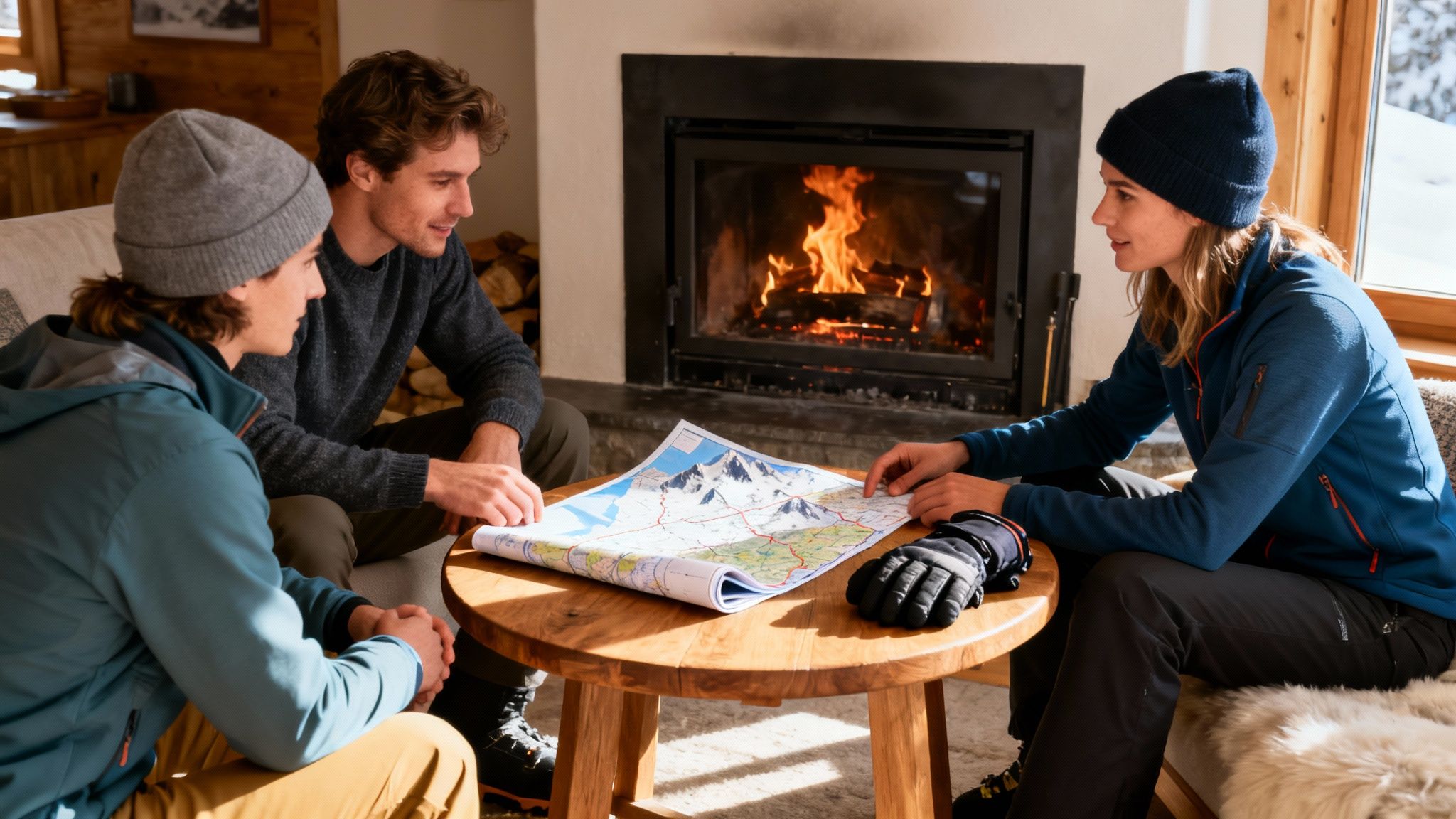
Before a single snowflake is even in the forecast, the real magic begins. This is the daydreaming phase, where you get to sketch out the perfect escape with your favorite people. The very first—and most critical—step in figuring out how to plan a ski trip is deciding what kind of trip this will actually be.
Is this a big family reunion filled with easy green runs and evenings spent playing board games by a roaring fire? Or is it a high-octane trip with old friends, focused on conquering black diamonds by day and hitting the liveliest après-ski spots by night? Maybe it’s a quiet, romantic escape for two, prioritizing cozy dinners over chasing first chair. Getting this part right sets the entire tone for your adventure.
Pinpointing Your Crew’s Ski Personality
Every group has its own travel style, and a ski trip is no different. Aligning everyone’s vision from the get-go is the secret to a friction-free vacation where everybody has a fantastic time. Let’s be honest, dragging a first-timer down a double-black diamond is a recipe for disaster. Forcing an expert to spend all day on the bunny hill is just as bad.
Get your group together—in person, on a video call, or even just a chaotic group chat—and start asking the important questions.
- Pace and Intensity: Are we going for a “first chair to last call” marathon, or is this more of a relaxed “ski a little, relax a lot” kind of pace? This helps set the daily expectations.
- On-Mountain Goals: Is the main point to log as much vertical as possible, master a new skill in a lesson, or just soak in the views from the chairlift?
- Après-Ski Vibe: Are we thinking lively bars with live music, quiet pubs for a craft beer, or just a relaxing soak in the hot tub back at the condo?
- Beyond the Slopes: How important are other activities like ice skating, shopping in the village, or a fancy dinner out? Understanding these priorities ensures you pick a resort that offers more than just great skiing. If you need some ideas, you can find fantastic inspiration in our guide detailing all the ways to have snow much fun.
By defining your “ski personality” early, you create a blueprint for success. This isn’t about compromising; it’s about crafting an itinerary where every single person feels like the trip was designed just for them.
Imagining the Perfect Day Itinerary
Now, let’s turn those vague ideas into a solid vision. A simple but incredibly effective trick is to have everyone in the group describe their ideal day on the trip. You might be surprised by the answers! This little exercise helps you weave everyone’s wishes into the plan, making sure the adventure you’re imagining is the one you actually get.
A Whimsical Itinerary for a Family Trip:
- Morning (9 AM): Operation “Pizza Slice.” The kids head to their ski lesson to become mini-mountain masters while the adults sneak in a few glorious blue runs together.
- Lunch (12:30 PM): A boisterous refuel mission at a casual on-mountain lodge for burgers, fries, and towering mugs of hot cocoa with extra whipped cream.
- Afternoon (2 PM): Time for a “family parade” down a scenic green run, followed by a village-wide search for the best cinnamon bun and maybe a few wobbly laps around the ice-skating rink.
- Evening (6 PM): Back at the condo for a home-cooked chili feast, followed by an epic board game tournament or movie night complete with popcorn.
A High-Energy Itinerary for a Friends Getaway:
- Morning (8:30 AM): First chair, no excuses! Split up by skill level to hunt for challenging terrain and untouched powder stashes. The goal: bragging rights by lunchtime.
- Lunch (1 PM): Quick pit stop at a mid-mountain spot for a craft beer and a gourmet brat to maximize ski time. No time to waste!
- Afternoon (2:30 PM): Meet up for a few final, thigh-burning laps before heading to a legendary slope-side après bar for drinks, dancing, and live music as the sun sets.
- Evening (8 PM): Dinner at the buzziest spot in town, then see where the night takes you. Maybe it’s another bar, maybe it’s the hot tub—no rules!
Nailing down this vision first makes every decision that follows—from choosing a destination to booking your lodging—infinitely easier.
Choosing Your Perfect Mountain Destination
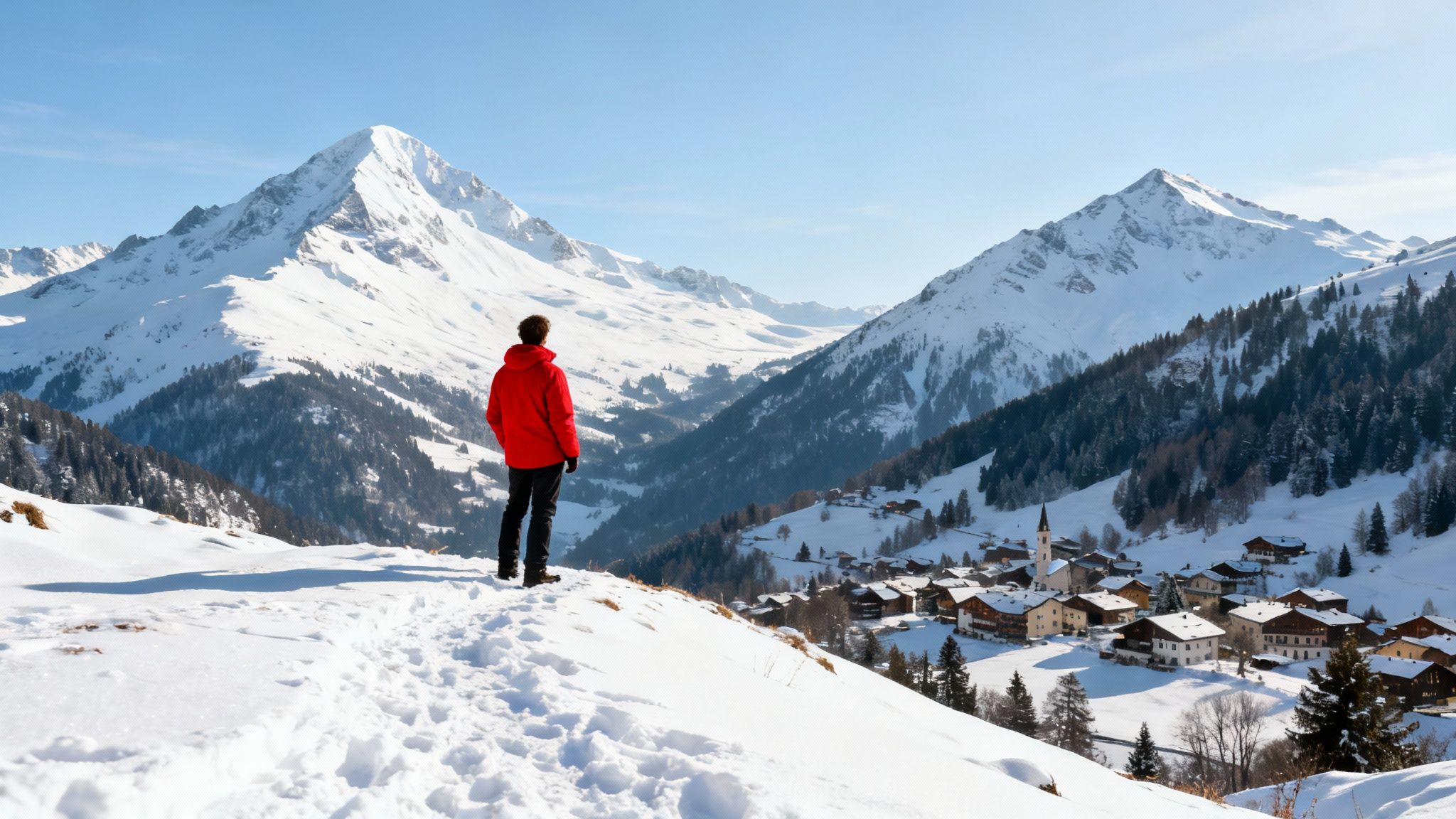
With a world of snowy peaks calling your name, picking just one can feel like the hardest part of planning. Don’t get stuck in analysis paralysis! The real trick is to match the mountain’s personality to your crew’s skill level, budget, and what you’re all looking for in a getaway.
Think of it this way: a resort known for its extreme, cliff-hucking terrain is probably the wrong call for a family with young kids still learning to “pizza” and “french fry.” On the flip side, a mountain with nothing but gentle, rolling green runs will leave a group of experts bored by lunchtime.
Let’s make this decision fun and get you pointed toward your perfect powder playground.
Know Your Crew’s Skill Level
First things first: get an honest read on everyone’s abilities. Are you all seasoned pros, a mixed bag of skills, or a group of enthusiastic first-timers? This one factor will immediately narrow down your options.
- Beginner-Friendly Resorts: Look for mountains with a high percentage of green and blue runs, a top-notch ski school, and a dedicated, slow-skiing learning area. Resorts like Beaver Creek in Colorado or Park City in Utah are famous for their unintimidating terrain and amazing instruction.
- Intermediate Havens: If your group is comfortable cruising blues and wants to start exploring more of the mountain, you’ll want a resort with tons of groomers. Think Sun Valley, Idaho, or the massive, interconnected areas of the Trois Vallées in France.
- Expert Paradise: For those who crave steep chutes, deep powder, and challenging tree runs, there’s a reason destinations like Jackson Hole, Wyoming, or Whistler Blackcomb in British Columbia are legendary.
Decide on a Destination Vibe
Beyond the slopes, what kind of town are you looking for? A ski town’s atmosphere can make or break a trip. Some are historic, charming villages, while others are purpose-built resorts buzzing with modern energy.
A great place to start is right here in North America. Planning a ski trip in the U.S. is a no-brainer for many—the United States leads the world with a staggering 60.5 million skier visits in a recent season, beating out both France and Austria. With over 500 resorts to choose from and 95% of those visits being domestic, it often means shorter travel days and less jet lag. You can uncover more about global ski tourism trends and how to beat the crowds.
Picking the right destination isn’t just about the mountain stats; it’s about finding a place that feels right. The perfect resort is where the on-mountain adventure and the off-mountain culture click perfectly with your group’s personality.
For example, a place like Zermatt, Switzerland, offers a car-free, fairytale village experience beneath the iconic Matterhorn, complete with gourmet on-mountain lunches. In contrast, a destination like Breckenridge, Colorado, serves up a lively, historic mining town vibe with an energetic Main Street packed with shops and bars.
Timing Is Everything
Finally, when you go is just as important as where you go. The ski season has distinct periods, each with its own pros and cons for snow, crowds, and cost.
Deciding between hitting the slopes during the peak holiday rush versus the quieter shoulder seasons will impact every single aspect of your trip, from your budget to your lift line waits.
Here’s a quick cheat sheet to help you decide.
Ski Season Snapshot: When to Book Your Trip
| Time of Year | What to Expect | Best For |
|---|---|---|
| Early Season (Nov – Mid-Dec) | Lower prices and fewer people, but snow coverage can be limited or variable. | Budget-conscious travelers and those willing to gamble on conditions for a quiet mountain. |
| Peak Season (Late Dec – Feb) | The best and most reliable snow conditions, but also the highest prices and biggest crowds. | Those prioritizing prime snow, especially during holiday breaks. The full winter wonderland experience! |
| Spring Skiing (Mar – Apr) | Warmer, sunny days, softer “hero” snow, and a fun, festive atmosphere with outdoor events. | Groups looking for a relaxed vibe, sunny patio lunches, and good deals. Goggle tans guaranteed! |
Thinking through these three elements—skill, vibe, and timing—will transform a daunting list of mountains into a curated selection of perfect-fit destinations. Now, the only question left is: where will your adventure take you?
How to Build a Ski Trip Budget That Actually Works
Let’s talk about the money. I know, I know—budgeting for a ski trip can feel a bit like staring into a blizzard, trying to figure out where the path is. But trust me, a solid budget isn’t about pinching pennies until they scream; it’s about smart planning so you can maximize the fun. Think of it as your secret weapon, the behind-the-scenes magic that makes the whole adventure happen without any financial frostbite later.
Mapping this out is really just about knowing where your money is going. We’ll break down the big-ticket items, sure, but we also need to account for those little moments—like that extra round of hot cocoa or the souvenir beanie you just have to get—that make a trip unforgettable. This isn’t about restriction; it’s about empowerment.
The Core Four Cost Categories
When I start sketching out a ski trip budget, I find that almost everything falls into four main buckets. If you can get a handle on these, you’ll have a surprisingly clear picture of the total cost and can start seeing where to tweak things to fit your style.
- Travel & Lodging: This is almost always the biggest piece of the pie. It’s your flights or gas money, any airport transfers or rental cars, and of course, where you’ll be crashing after a long day on the slopes.
- On-Mountain Essentials: This covers everything you need to actually ski or snowboard. We’re talking lift tickets, gear rentals (skis/board, boots, helmet), and any lessons or guides you might want to book.
- Food & Drink: From quick grab-and-go lunches on the mountain to celebratory dinners in the village, fuel is a major part of the equation. And don’t forget to account for groceries if your place has a kitchen!
- The Fun Fund: This is for everything else! Après-ski drinks, souvenirs, non-skiing activities like ice skating, and any other spontaneous adventures that pop up along the way.
Finding the Savings Sweet Spots
Here’s the good news: an incredible ski trip doesn’t have to vaporize your bank account. With a little insider know-how, you can find some serious value. One of the single best ways to save is by bundling your lodging and lift tickets. Seriously, so many resorts and third-party travel sites offer packages that can shave a huge chunk off the total cost.
Another pro tip? Book your gear rentals in advance from a shop in town rather than right at the resort base. You’ll often find better prices, higher-quality equipment, and much friendlier service. To put it in perspective, a day pass at a top-tier resort might run you $200+ at the ticket window, but booking online ahead of time or as part of a bundle could easily drop that price by 20-30%.
Your ski trip budget isn’t a rigid set of rules; it’s a flexible guide. The goal is to spend smartly on the essentials so you have more to splurge on the experiences that create lasting memories.
Sample Budgets for Different Vibes
To make this less abstract, let’s play with some numbers. Here’s how a budget might shake out for a hypothetical 4-day, 3-night trip for two people, not including airfare.
The Budget-Savvy Sliders
- Lodging: Off-mountain hotel or Airbnb ($150/night) = $450
- Lift Tickets: 2 days, pre-purchased online ($150/day each) = $600
- Gear Rental: In-town shop ($50/day each) = $200
- Food: Mostly groceries, one nice dinner out ($250)
- Total: Around $1,500
The Mid-Range Mountain Cruisers
- Lodging: Ski-in/ski-out condo ($350/night) = $1,050
- Lift Tickets: 3 days, bundled with lodging ($175/day each) = $1,050
- Gear Rental: Resort delivery service ($70/day each) = $420
- Food: Mix of eating in and dining out ($500)
- Total: Around $3,020
Coordinating finances can get messy, especially with a larger crew. For more tips on managing shared expenses without the headache, check out our complete guide on how to plan a group trip. It’s packed with practical advice to keep everyone on the same page.
Mastering Your Bookings and Logistics
Alright, you’ve picked a destination and you’ve got a budget. Now for the fun part: making this thing real. This is where your mountain dreams start turning into confirmed reservations and calendar invites.
Think of this phase like putting together a puzzle. You have all the pieces—flights, lodging, passes, gear—and the goal is to get them to click together perfectly. Let’s move from the “what if” to the “when and where,” locking in the details that make a trip unforgettable.
Building Your Booking Timeline
Timing is everything when you’re planning a ski trip. Seriously. Booking your key components at just the right moment is your superpower for saving money and, maybe more importantly, getting the choices you actually want instead of settling for what’s left.
For flights, the sweet spot is typically two to three months before you plan to go. This is when airlines tend to offer the best balance of price and availability.
Lodging, however, is a different beast entirely. The clock starts ticking much, much earlier. Coveted spots—think big rental homes for a crew or those perfect ski-in/ski-out condos—can get snatched up six to nine months in advance, especially if you’re targeting peak season dates like President’s Day weekend or spring break.
This timeline breaks down the ideal booking windows for the biggest pieces of your ski trip puzzle.
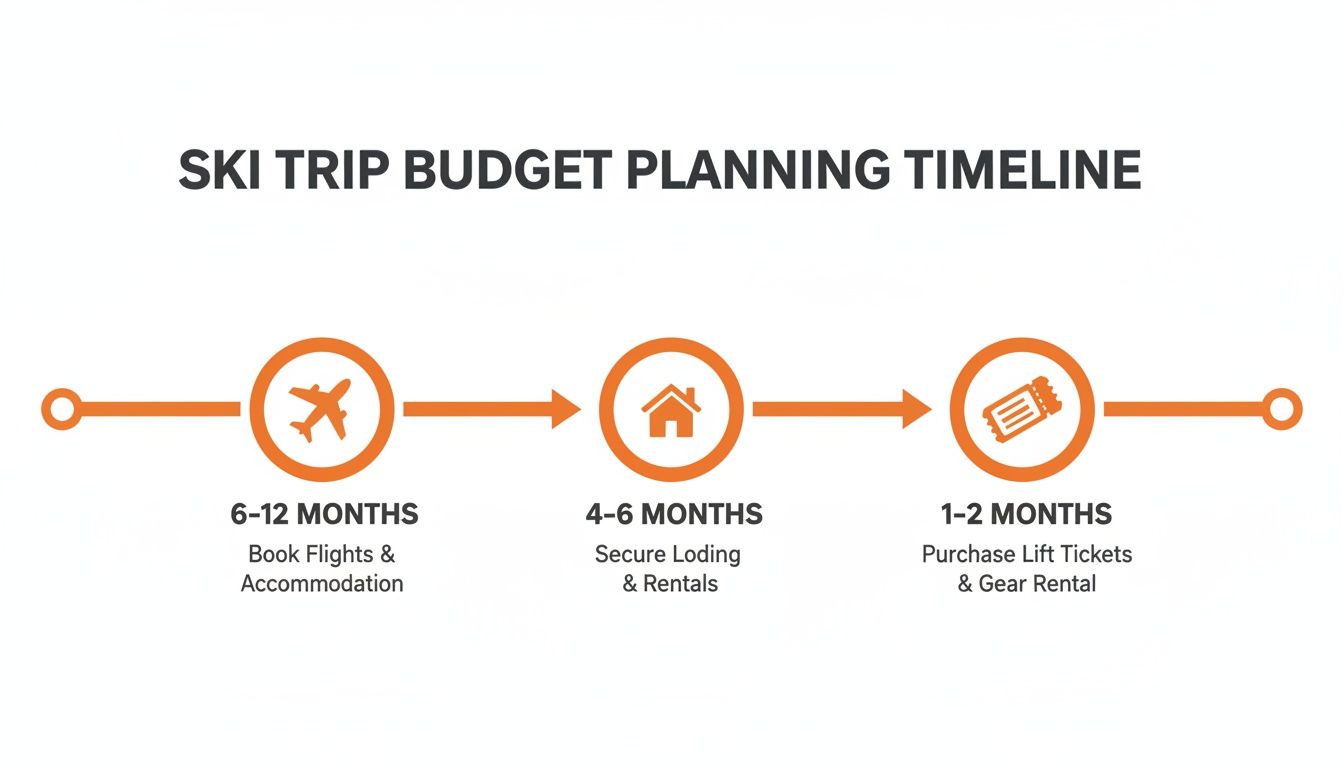
The takeaway here is simple: lock in your biggest commitments, like flights and lodging, long before you even start worrying about the smaller details.
Choosing Your Mountain Crash Pad
Where you stay sets the whole vibe for your trip. Are you a big group that loves communal dinners and late-night card games? A spacious rental home with a full kitchen is your best bet, hands down. Or maybe you’re all about convenience, wanting to click into your skis right outside your door? That ski-in/ski-out hotel or condo might be worth the splurge.
Let’s break down the main options:
- Hotels: These are great for amenities like daily housekeeping, on-site restaurants, and of course, hot tubs. They’re perfect for couples or smaller groups who value service over sprawling space.
- Condos: This is a fantastic middle ground. You get more space than a hotel room, often with a kitchenette for whipping up breakfast or packing lunches. Plus, many are in prime, slope-side locations.
- Rental Homes: The undisputed champion for larger families or groups of friends. They offer the most space, privacy, and a full kitchen for cooking group meals—a huge money-saver.
The right accommodation isn’t just a place to sleep—it’s your base camp for adventure. Think about how your group dynamic works. If shared experiences are the goal, a single large space will always win out over scattered hotel rooms.
Trying to manage all the moving parts for a group can feel like herding cats, but it doesn’t have to be a nightmare. To keep everything organized and stress-free, check out our guide on how to book group travel without losing your mind.
Demystifying Lift Passes and Rentals
Lift tickets can be one of the most confusing—and expensive—parts of the plan if you’re not careful. Let me be clear: walking up to the ticket window on the day of is almost always the worst possible option.
Always buy online, and do it well in advance. If you’re skiing for more than four days, look into a multi-resort season pass like the Epic Pass or Ikon Pass. They can offer incredible value and often pay for themselves in just one trip.
And please, don’t forget about your gear! Reserving your skis, boots, and helmet ahead of time is non-negotiable. Booking online with an in-town shop (not the one at the resort base) will usually save you 15-25% and guarantees they’ll have your sizes waiting. This one simple step keeps you from wasting your precious first morning stuck in a long rental line.
Finally, figure out your airport-to-mountain transport. Booking a shared shuttle or private transfer in advance is key, as ride-sharing services can be sparse and wildly expensive in remote mountain towns.
Once these logistics are locked in, you’re golden. All that’s left is to start the countdown.
Preparing for Your Time on the Slopes
The countdown is officially on. Flights are booked, the condo is secured, and the anticipation is starting to feel electric. These final weeks are all about shifting from big-picture logistics to the nitty-gritty details that make a trip truly seamless.
Think of this phase as your pre-flight briefing. We’re talking about what actually goes into your suitcase, coordinating the final details for your crew, and getting your body ready for the unique demands of a high-altitude adventure. A little prep work now pays off big time when you’re clicking into your bindings for that first run.
Your Ultimate Ski Trip Packing Guide
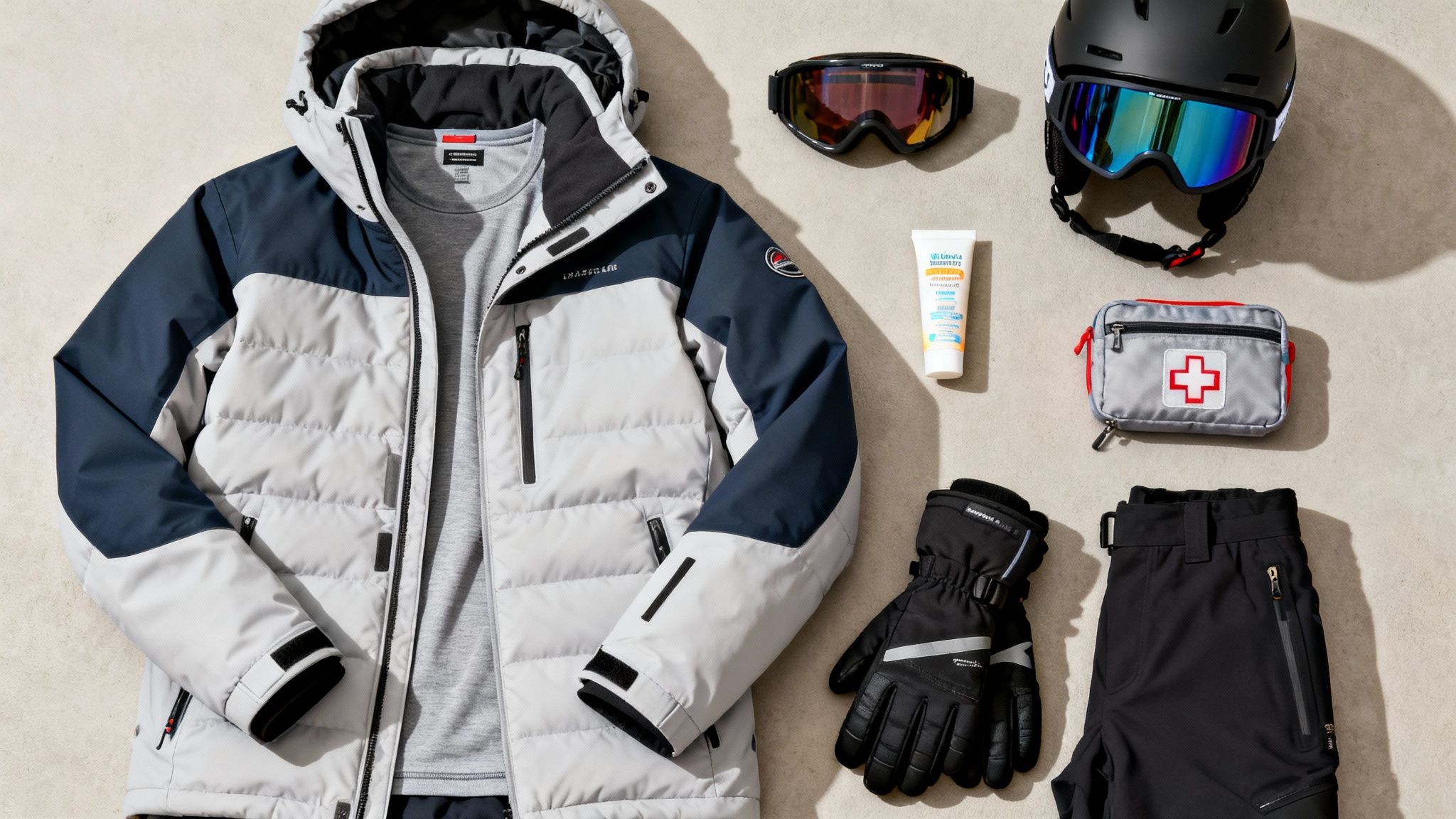
Packing for the mountains is an art form—a delicate balance of technical gear and cozy village attire. The secret weapon here, as any seasoned skier will tell you, is layering. Mountain weather is notoriously fickle; you can have brilliant sunshine, biting wind, and heavy snowfall all in the same afternoon. Dressing like an onion is the only way to stay comfortable.
Here’s a practical breakdown of the essentials, from your skin to your shell:
- Base Layers: This is your foundation. Think moisture-wicking long underwear—merino wool or synthetics are your best friends here. Avoid cotton at all costs, as it holds moisture and will leave you chilled.
- Mid-Layers: This is your insulation. A fleece jacket, a puffy vest, or a light down sweater traps body heat. You can easily add or shed this layer and stuff it in a backpack as the day warms up or cools down.
- Outer Layers (Shell): Your personal fortress against the elements. A waterproof and windproof jacket and pants are absolutely non-negotiable. They keep the snow out while letting moisture from your inner layers escape.
Beyond your on-mountain kit, don’t forget the other critical pieces. Your feet will thank you for bringing a couple of pairs of high-quality, non-cotton ski socks. For wandering around town, pack comfortable boots with good grip, a warm hat, and some casual layers for dinners out.
Dialing in the Final Logistics
With the big bookings behind you, now is the time to nail down the smaller (but equally important) details. If you have beginners or intermediates in your group, booking ski or snowboard lessons well in advance is a must, especially during peak season. Group lessons and private instructors can be fully booked weeks or even months ahead of time.
This is also the moment to get organized with your travel companions.
- Dinner Reservations: The best restaurants in ski towns get booked solid, particularly on weekends and holidays. Decide on a few must-try spots and lock in those reservations now.
- Grocery Plan: Staying in a condo with a kitchen? A pre-trip grocery plan is a game-changer. Assign items to different people or arrange a grocery delivery service to avoid that chaotic first-night scramble at an overpriced, crowded mountain market.
The most seamless group trips I’ve ever been on were the ones where the little details were sorted out before we even left home. A shared Google Doc with reservation confirmations, grocery lists, and a loose daily itinerary can work wonders for keeping everyone on the same page.
Health, Safety, and High-Altitude Smarts
Finally, let’s talk about showing up in top form. Arriving at a mountain destination means heading to a higher altitude, and your body will absolutely notice the difference. The air is thinner, which can lead to fatigue, headaches, and shortness of breath if you’re not careful.
Acclimatization is key. The best strategy is to take it easy on your first day. Seriously. Don’t go for a five-mile run or hit the hardest terrain on the mountain. Plan for a relaxed arrival day with tons of water and a light dinner.
Your High-Altitude Health Checklist
- Hydrate, Hydrate, Hydrate: Start drinking extra water a day or two before you even leave for your trip. Keep it up once you arrive—aim for at least a gallon a day.
- Limit Alcohol: Especially that first night. Alcohol can amplify the effects of altitude sickness and dehydrates you much faster.
- Eat Smart: Focus on complex carbohydrates, which your body can metabolize more efficiently with less oxygen.
- Listen to Your Body: If you feel unwell, don’t try to power through it. Rest is your best friend when you’re adjusting.
Lastly—and this is a big one—double-check your travel insurance. Things happen. Flights get canceled, bags get lost, or someone takes a tumble on the slopes. Proper insurance provides a critical safety net, ensuring a minor hiccup doesn’t derail your entire adventure or your finances. A comprehensive policy is one of the smartest investments you can make for any ski trip.
Your Pre-Trip Huddle: Answering Those Lingering Questions
You’ve got the vision, the destination is circled on the map, and the logistics are starting to fall into place. Perfect. But even the best-laid plans can leave a few nagging questions. Let’s tackle the most common queries we hear from fellow travelers so you can head for the hills with total confidence.
Think of this as your final planning huddle, where we iron out the last-minute details and get everyone hyped for the adventure ahead.
How Far in Advance Should I Plan a Ski Trip?
For the absolute best selection and pricing, you’ll want to kick things off 6 to 12 months in advance. This is non-negotiable if you’re eyeing a popular resort during a peak time like the holidays or spring break. We’re not just talking about saving a few bucks; we’re talking about getting that spacious condo with the perfect hot tub view or securing spots in the top-rated kids’ ski school before they’re gone.
If a quieter, off-peak getaway is more your speed, a 3 to 6-month window usually gives you plenty of breathing room. The golden rule? Lock in your flights and accommodation first. Those are always the first pieces of the puzzle to disappear.
What if Some People in My Group Don’t Ski?
This is where modern ski resorts really shine—they’re not just for skiers anymore! Most major destinations are packed with incredible activities for anyone who isn’t clipping into bindings.
Picture this for the non-skiers in your crew:
- Morning: A scenic gondola ride to the summit for breathtaking panoramic views and a hot chocolate at the peak lodge.
- Afternoon: A peaceful snowshoe trek through frosted forests, or maybe an adrenaline-pumping snowmobiling tour.
- Evening: Unwinding with a treatment at a world-class spa before meeting up with the skiers for a festive dinner in the village.
When you’re choosing a destination, look for one with a vibrant, walkable base village. Places like Zermatt, Switzerland, or Whistler, British Columbia, are legendary for their pedestrian-friendly town centers, packed with shops, ice skating rinks, and cozy cafes. It ensures everyone has an amazing vacation, on and off the slopes.
Is It Cheaper to Rent Ski Gear or Bring My Own?
This really boils down to two things: how often you ski and your tolerance for schlepping gear through an airport.
For most folks who ski once or twice a year, renting is the clear winner. It’s way more cost-effective when you factor in steep airline baggage fees (which can run $50-$100 each way), and it lets you try out the latest and greatest equipment every year.
Pro Tip: Always rent from a local shop in town rather than directly at the resort base. You’ll almost always find better prices, more personalized service, and a much higher-quality selection of gear.
Now, if you’re a dedicated skier who hits the slopes multiple times a season, investing in your own ski boots is the single best upgrade you can possibly make. A custom-fitted boot delivers unmatched comfort and performance. You can always rent the skis and poles at your destination to save on the hassle.
How Do I Choose Between the Epic Pass and Ikon Pass?
Ah, the great pass debate! The “best” pass is simply the one that covers the mountains you actually want to visit. The first step is to make a wish list of resorts your group is excited about, then see which pass aligns with those dreams.
Here’s the basic breakdown:
- The Epic Pass is your ticket to Vail Resorts properties, which includes heavy-hitters like Vail, Breckenridge, Park City, and Whistler.
- The Ikon Pass grants access to a different roster of legendary mountains, such as Aspen Snowmass, Jackson Hole, Steamboat, and Deer Valley.
Think about how many days you realistically plan to ski. Both passes come in different tiers with varying levels of access and a few blackout dates on the lower-priced options. If you’re planning more than one ski trip in a season—or even just one trip longer than a week—a multi-resort pass almost always provides incredible value compared to buying daily lift tickets at the window.
Planning the perfect ski trip involves a lot of moving parts, but you don’t have to tackle it alone. At Those Who Wander, LLC, our team specializes in crafting custom-built ski adventures that match your group’s unique style and budget. From securing the perfect slope-side lodging to arranging every logistical detail, we handle the planning so you can focus on the powder. Let us help you turn your mountain daydreams into an unforgettable reality. Find out how we can build your dream trip.
Pingback: A Guide to Travel Insurance Options-Wanderer's Journal Blog
Pingback: National Park Adventures--Wanderer's Journal Blog
Pingback: Those Who Wander, LLC