
How to Get Hotel Upgrades: Your Guide to a Better Room
Scoring a hotel upgrade often feels like a game of chance, but it’s really more about smart strategy than random luck. The secret sauce is a simple mix of polite communication, strategic timing, and knowing how to play your cards right. Get that combination down, and you can turn a standard booking into a truly magical experience.
Your Guide to Scoring a Better Stay
Ever dreamed of walking into a sprawling suite you didn’t pay for? It happens. Imagine kicking off a family reunion in a sun-drenched Italian villa and being handed the keys to a private wing instead of three separate rooms. Or starting a whimsical Parisian getaway with a surprise upgrade to a balcony suite overlooking the Eiffel Tower.
These moments aren’t just for influencers and high-rollers; they’re surprisingly attainable with the right approach. This guide is here to demystify the art of the hotel upgrade, turning that whimsical possibility into a reality for your next trip.
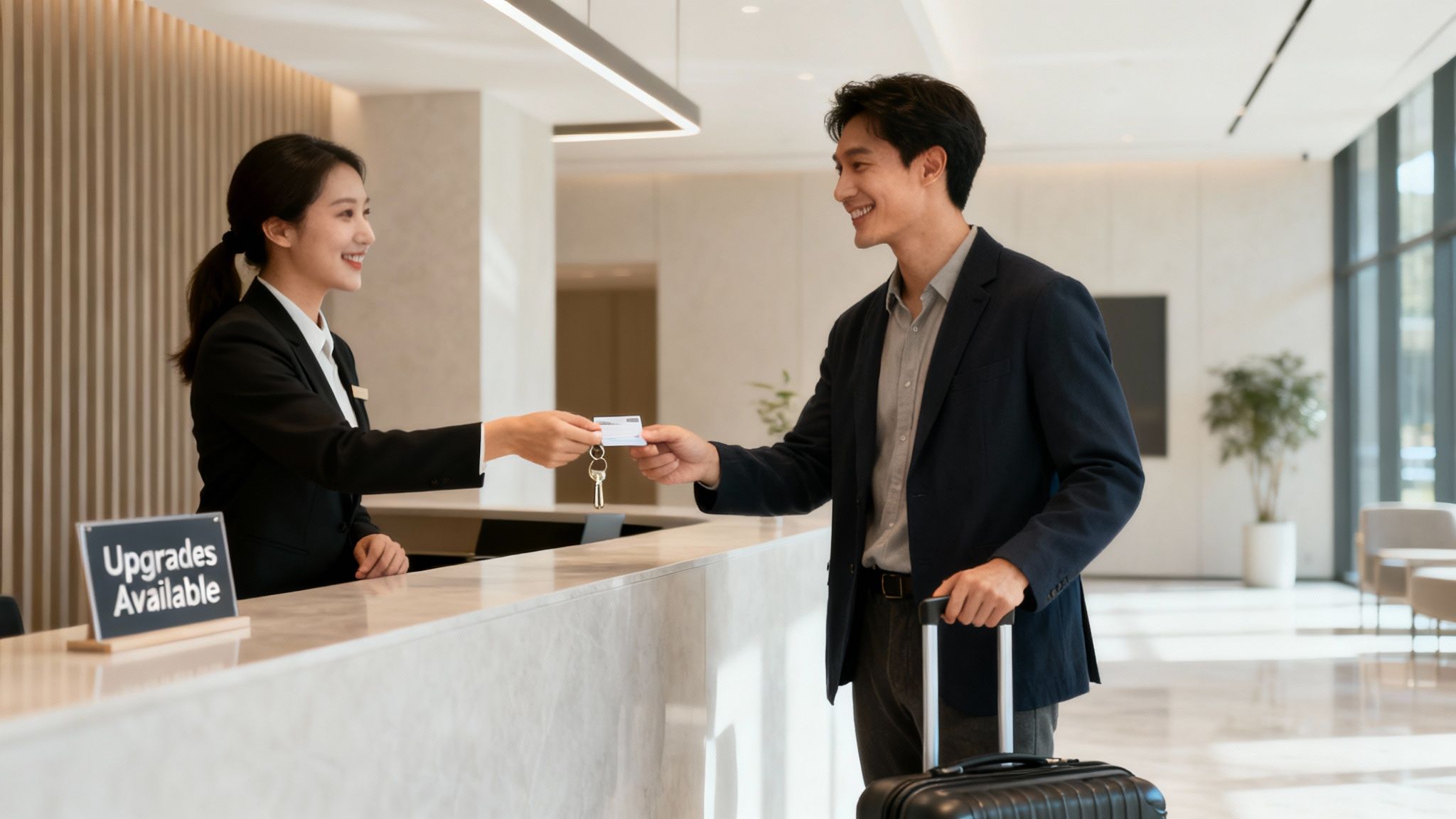
Think of this as your pre-flight briefing for Operation Suite Success. We’ll start by setting the stage with the perfect mindset: a blend of genuine friendliness, knowing the best time to ask, and understanding who holds the keys to a better room. It’s not about demanding a freebie, but about creating a situation where everyone wins.
Why Hotels Offer Upgrades
Let’s get one thing straight: hotels aren’t just being generous—upgrades are a powerful business tool. They use them to manage room inventory, delight valuable guests, and hopefully generate glowing reviews. An empty suite earns zero revenue, so giving it to a happy guest who might come back or tell their friends is often a brilliant move.
This is especially true for properties with a lot of premium rooms. Picture this: you’ve just landed in Maui for a week of bliss, and the front desk agent smiles and says they’ve put you in a suite with an ocean view. That’s the magic of standby upgrade programs, which savvy hotels use to boost profits by up to 35%.
A 2016 study found that these programs work best when hotels have lots of unique suites and cater to one-time visitors. It’s a simple way to turn empty luxury spaces into cash cows while making a traveler’s day. You can find out more about how hotels profit from room upgrades if you want to dig deeper.
The Mindset for Success
Your approach at the check-in desk is everything. The goal is to be the kind of guest they want to help, not the one they’re trying to get rid of. Instead of thinking of it as a transaction, see it as a human connection.
The most successful upgrade requests I’ve seen come from a place of kindness and genuine excitement for the stay. It’s about being memorable for all the right reasons.
Remember these key points as you walk up to the counter:
- Be Personable: A warm smile and a bit of friendly conversation can go a surprisingly long way. Ask them how their day is going before you ask for anything else.
- Be Specific but Flexible: Simply saying “I’d love an upgrade” is vague. Mentioning you’d appreciate a room with a better view or one on a higher floor is much more effective.
- Celebrate Something: Anniversaries, birthdays, or even the start of a big adventure are fantastic reasons to politely inquire about an upgrade. Hotels love being part of a special occasion.
- Know Your Value: If you’re a loyalty member or a repeat guest, gently remind them. It shows you have a relationship with the brand, which they value.
Key Factors for a Hotel Upgrade
To give you a quick cheat sheet, here are the core elements that dramatically increase your chances of landing a better room. Keep these in mind from booking to check-in.
| Factor | Why It Matters | Your Action |
|---|---|---|
| Timing Your Arrival | Checking in late afternoon/early evening gives the hotel a clearer picture of their final room inventory for the night. | Aim to arrive between 3 p.m. and 6 p.m. Avoid peak morning check-out times when staff are swamped. |
| Loyalty Status | Hotels prioritize their most loyal customers. Elite status with brands like Marriott, Hilton, or Hyatt is your golden ticket. | Always book directly and make sure your loyalty number is on the reservation. Mention your status at check-in. |
| Booking Channel | Hotels prefer direct bookings because they don’t have to pay a commission to a third-party site like Expedia. | Book directly on the hotel’s website or use a travel advisor. You’ll have much more leverage. |
| Trip Duration | A shorter stay (1-2 nights) makes it easier for the hotel to upgrade you, as it won’t tie up a premium room for long. | If you’re staying for a week, your chances are lower. The sweet spot is a one- or two-night stay. |
| Polite & Specific Ask | A friendly, non-demanding request is always better. Vague requests are easy to dismiss. | Smile, be courteous, and ask for something specific, like “a corner room” or “one with a nice view.” |
Mastering these factors doesn’t guarantee a presidential suite every time, but it certainly stacks the odds in your favor for a more memorable stay.
Mastering the Art of the Upgrade Request
How and when you ask for that coveted hotel upgrade is everything. Seriously. It’s the difference between getting a polite-but-firm “no” and hearing the magic words, “Yes, we have a junior suite available for you.”
Think of it as your opening act—it sets the entire tone for your stay. This is your playbook for making a great first impression that actually gets you a better room, whether you’re planning a honeymoon in Paris or just a celebratory weekend away.
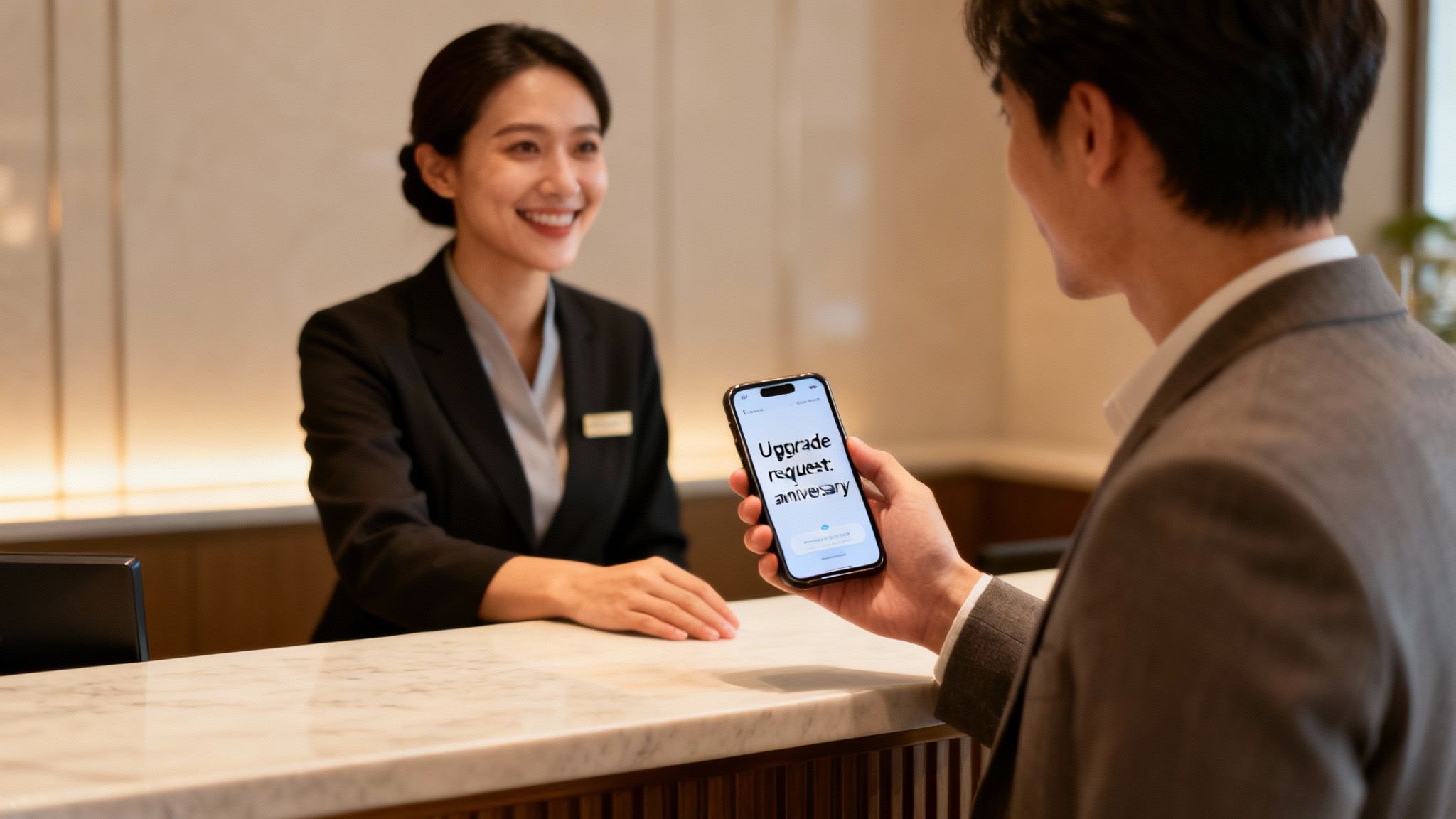
The secret isn’t some magic phrase; it’s a simple blend of good timing, the right tone, and a genuine human connection. Just walking up and blurting out, “Can I get an upgrade?” almost never works. It feels transactional and immediately puts the front desk agent on the defensive.
Instead, the goal is to be personable. You want to make them want to sprinkle a little extra pixie dust on your trip.
Planting the Seed Before You Arrive
Your quest for a better room can—and should—start long before you’ve even packed your bags. A well-crafted email sent about a week before your arrival can work wonders. It’s polite, it isn’t demanding, and it gives the hotel staff plenty of time to add a note to your reservation.
This approach is especially effective when you’re celebrating something special. Let’s say you’re headed to a charming riad in Marrakech for your anniversary. A short, sweet note to the front desk or concierge is the perfect move.
Pro Tip: Always frame your pre-arrival email around your excitement for the stay. Mentioning a specific detail you’re looking forward to—like trying the rooftop bar or dining at their signature restaurant—shows you’ve done your homework and are genuinely invested in the experience.
Here’s a simple template you can adapt. Just remember to find the direct email for the hotel’s front desk, not some generic corporate inbox.
- Subject: Exciting Stay Coming Up – [Your Name], [Confirmation #]
- Body: “Hello! My partner and I are so looking forward to celebrating our anniversary with you on [Date]. We chose your hotel specifically for its beautiful ambiance. If any complimentary celebratory upgrades happen to be available for our stay, such as a room with a lovely view, we would be incredibly grateful. We completely understand if that’s not possible and are simply thrilled to be staying with you either way. Thank you so much!”
This simple gesture has a surprisingly high success rate. It’s kind, it sets zero expectations, and it makes you stand out from the hundreds of other faceless reservations.
Nailing the Check-In Conversation
When you finally arrive, your interaction at the front desk is your final and best shot. This is where a little charm goes a very long way.
Greet the agent with a warm smile. Make eye contact. Ask them how their day is going before launching into your request.
Instead of a direct demand, phrase it as a hopeful, almost playful question. Try something like this: “We are so excited for our stay. I know this is probably a long shot, but if a corner room with a better view just so happens to be available, we would be absolutely over the moon.”
This language is collaborative, not confrontational. You’re positioning the front desk agent as the hero of your story, giving them the power to make your trip special. And that, my friend, is how you truly master the art of the upgrade.
Why Your Booking Method Matters
In the eyes of a hotel manager, not all reservations are created equal. Where you click “confirm” on your booking can dramatically shift your position in the upgrade queue, turning a simple choice into a strategic move for your next adventure.
Think of it like this: booking directly with the hotel is like making a new friend. You’re starting a direct relationship, and hotels love that because they don’t have to pay a hefty commission to a third-party site. This instantly makes your reservation more valuable to them.
On the other hand, booking through a big online travel agency can sometimes put you at the bottom of the list. When a hotel has a limited number of suites to give away, they’ll almost always prioritize their direct bookers and loyal members first. It’s just smart business for them.
The Travel Advisor Secret Weapon
So, what’s the ultimate power move? It’s booking through a travel advisor who is part of a preferred partner program. This is the secret weapon for travelers in the know.
When you book your Italian family reunion or that much-needed romantic getaway to Santorini through an advisor with affiliations like Fora, Virtuoso, or American Express Fine Hotels + Resorts, you’re not just another reservation number. You arrive with instant VIP status.
These programs are essentially a hotel’s “friends and family” list. Booking through an affiliated advisor gets your name on that list, unlocking a treasure chest of perks you simply can’t access on your own.
This is because hotels have deep, established relationships with these networks. They know that clients sent by these advisors are serious travelers who appreciate quality service. In return, they roll out the red carpet with a suite of exclusive benefits. To see how this works, check out our guide on how to unlock travel agent benefits for your next trip.
Unlocking the VIP Perk Pool
What exactly does this “VIP status” get you? It’s far more than just a shot at a better room. It’s a guaranteed bundle of value that elevates your entire trip from the moment you check in.
These exclusive perks often include:
- Complimentary room upgrade (subject to availability): This isn’t just a hope; you are automatically placed at the top of the list for that corner suite or room with a view.
- Daily breakfast for two: A delicious, free start to your day that can easily save you a significant amount over a week-long stay.
- A property credit: This is typically around $100 and can be used for anything from spa treatments and drinks at the bar to a nice dinner.
- Early check-in and late check-out: Giving you more flexibility and precious time to enjoy the property without rushing.
By choosing your booking method wisely, you’re not just crossing your fingers for an upgrade; you’re setting the stage for one. You’re making the smartest decision right from the start, ensuring your trip is packed with extra value and delightful surprises before you even zip up your suitcase.
Leveraging Loyalty for Better Rooms
In the wild world of hotel stays, loyalty isn’t just a buzzword—it’s everything. If you’re looking for a consistent, long-term strategy to score better rooms, pledging allegiance to one hotel brand is your most reliable play. Programs like Marriott Bonvoy, Hilton Honors, and World of Hyatt are built from the ground up to reward their most frequent guests, and elite status is the golden ticket.
Think about it from the hotel’s perspective. When a fantastic corner suite unexpectedly opens up, who are they going to give it to? The random guest who booked through a third-party site for a one-night stay, or the Gold Elite member who’s with them ten times a year? It’s a no-brainer. Your loyalty status is a powerful signal to the front desk that you’re a valuable, repeat customer worth keeping happy.
Fast-Track Your Way to Elite Status
Gaining elite status might sound like a long grind reserved for serious road warriors, but there are some clever shortcuts.
The quickest way to jump the line? A co-branded credit card. Many hotel cards, like those from the Hilton Honors American Express lineup or the Chase World of Hyatt card, grant you automatic elite status just for being a cardholder.
This is a complete game-changer. You can walk into a hotel for the very first time with Silver or Gold status already attached to your name. Right away, you’re on the priority list for things like late check-outs, bonus points, and, of course, those coveted room upgrades. For a deeper look at how business travel can put this on hyper-speed, our guide on the role of a corporate travel advisor has some great insights.
Making Your Status Work for You
Having the status is one thing; knowing how to use it is another. A friendly, subtle mention of your status at check-in can work wonders. This isn’t about being pushy or demanding; it’s just a gentle reminder of your relationship with the brand.
Try something casual like, “I’m a Platinum member and so excited for this stay. If there happen to be any complimentary Bonvoy upgrades available, I would be so grateful.” This politely flags your loyalty without sounding entitled. It reminds the agent of your value and opens the door for them to offer you something special if they can.
At the end of the day, hotels are a business, and technology helps them balance rewarding loyalty with maximizing revenue. Strong programs have been shown to spike positive reviews by 15-20%, turning a simple room upgrade into a powerful marketing tool.
Hotels are also getting much smarter about this whole process. Many now use digital tools to offer you paid upgrades through their mobile apps before you even arrive. Their systems analyze occupancy rates and your guest history to pitch personalized offers, knowing that an upgraded guest is often a happier—and more loyal—one. You can find more on how hotels use tech for upgrades at ProStay.com. By understanding both the loyalty game and the business behind it, you put yourself in the perfect position to land that better room.
Upgrade Tactics for Every Traveler
Let’s be real: the quest for a hotel upgrade isn’t a one-size-fits-all game. The way a solo adventurer sweet-talks their way into a better room at a charming boutique lodge is worlds away from how a family wrangles connecting rooms for a big reunion. You’ve got to tailor your approach to the trip.
Think of it this way: a friendly chat might be your golden ticket at a small, independent spot. But for that big spring break trip with all your friends? It’s all about leveraging your group’s booking power.
The Family and Group Playbook
Traveling with the whole crew or a big group? Your strength is in your numbers. When you’re booking a block of rooms, you have some serious negotiating power that goes way beyond just getting a decent rate. This is your chance to think bigger: ask for connecting rooms, a multi-bedroom suite, or even a complimentary common area for everyone to gather.
Let’s say you’re planning that big family getaway to Italy. Don’t just click “book” on a travel site. Instead, reach out to the hotel directly—or better yet, have your travel advisor make the call. Frame your request around the experience. Explain that you need a central space for the family to gather each evening. Suddenly, it’s not just a room request; it’s a logistical necessity the hotel can often help with. For a deeper dive, you can explore more strategies for coordinating travel for big groups.
The key with group travel is to make the hotel’s life easier. When you present your needs clearly and early, you position yourself as an organized, high-value booking they’ll be motivated to keep happy.
Adventure Travelers and Boutique Stays
For the adventure traveler, the game changes completely. When you’re checking into a unique boutique lodge in Aspen after a day on the slopes, your Marriott Bonvoy status means next to nothing. Here, your personality is your currency.
Take a few minutes to actually connect with the staff at check-in. Ask them about their favorite local spots, share a quick story from the road, and show some genuine interest in the property itself. I’ve found that a simple, friendly conversation can be the very thing that gets them to offer you that coveted room with the slope-side view, all because you made a human connection.
The Power of the Paid Upgrade
Sometimes, the smartest path to a massive room improvement is a small, strategic investment. Don’t be afraid to negotiate a modest paid upgrade when you check in. This can deliver incredible value, especially if the hotel has a lot of its premium rooms sitting empty. It’s a classic win-win: the hotel brings in extra revenue on a room that would have otherwise gone unsold, and you get to live it up in luxury for a fraction of the sticker price.
This whole approach is rooted in smart hotel economics. In fact, standby upgrades can boost a hotel’s profits by 30-35% in the right situations. It’s a model that works especially well for hotels with unique premium offerings, like rooms with ocean views versus city views. They are often more than happy to negotiate a fair price at the desk, especially with guests who aren’t the predictable, status-holding regulars. You can even see how Accor helps its hotels unlock profitability with these exact methods.
This decision tree gives you a good look at how loyalty status often dictates a hotel’s first move when they’re thinking about an upgrade.
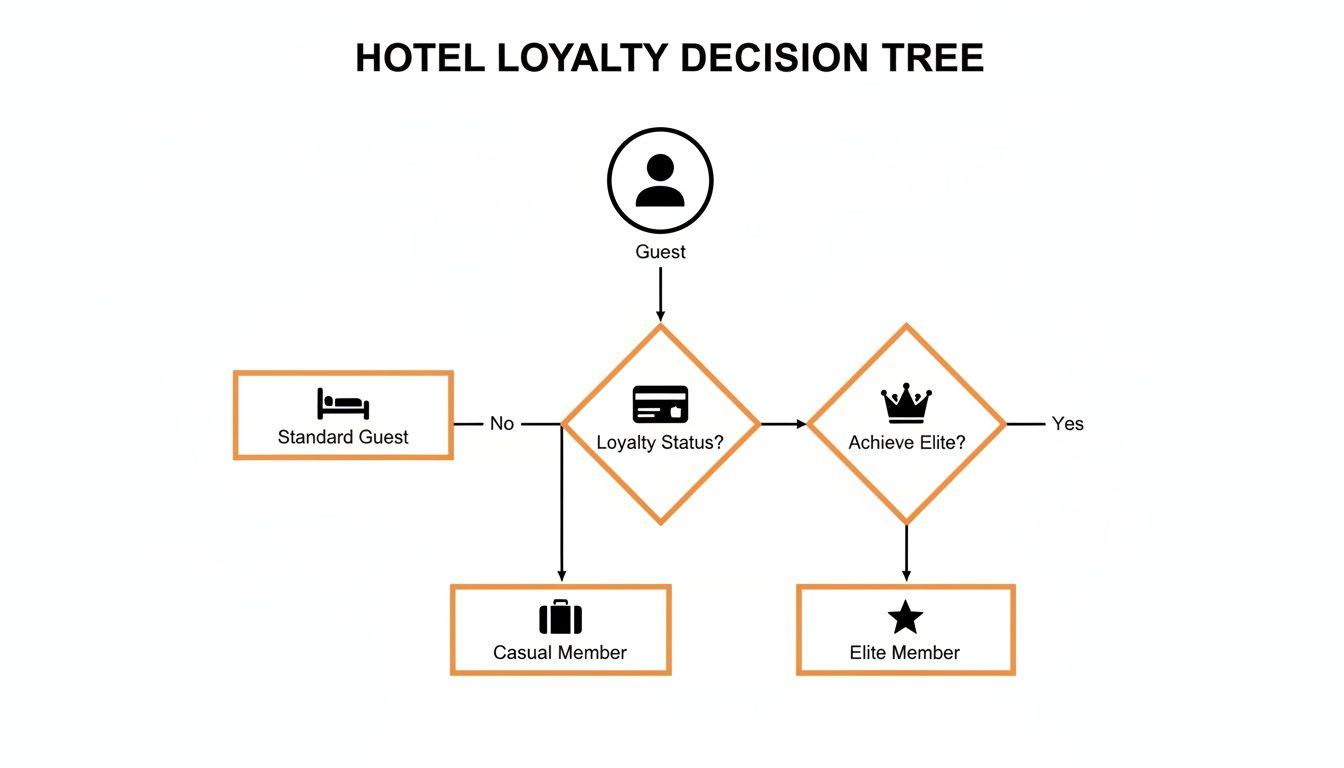
As you can see, having elite status puts you in the priority lane for complimentary perks right away, but every single traveler has a path to a better stay.
Your Burning Hotel Upgrade Questions, Answered
Alright, you’ve got the playbook, but maybe a few specific scenarios are still rattling around in your head. It’s totally normal. Let’s run through some of the most common questions I get from travelers trying to score that coveted corner suite.
Think of this as your final pre-flight check before you walk up to that front desk. You’ve got your strategy, you’ve packed your politeness, and now it’s time for the lightning round.
Does the “Hundred Dollar Trick” Actually Work?
Ah, the legendary “sandwich” trick—slipping a crisp bill between your ID and credit card. While you might hear tales of success in tip-heavy places like Las Vegas, it often comes off as clunky and awkward anywhere else. Frankly, it can make the front desk staff pretty uncomfortable.
A much better play is to build a genuine, friendly connection. If you really want to show your appreciation, a small, thoughtful local gift or a generous tip after you’ve received amazing service is a far classier move. Focus on the human element first; it’s more authentic and almost always gets better results.
Is It Better to Check In Early or Late for an Upgrade?
This is the great debate in the travel world, isn’t it? The sweet spot is almost always later in the afternoon, think 5 or 6 PM. By then, the front desk team has a crystal-clear picture of their inventory for the night, including any no-shows or last-minute cancellations.
They know exactly which premium rooms are sitting empty and are much more likely to offer one to a friendly, patient guest. Checking in early might get you into a room faster, but it will almost certainly be the standard one you booked. The suites and view rooms probably haven’t even been cleared by housekeeping yet.
Traveler’s Takeaway: Patience really does pay off here. Arriving when the hotel has the most clarity on its room situation gives you the best odds. Think of it as showing up fashionably late to the upgrade party.
Do I Have a Better Chance on a Short or Long Stay?
This one depends on what you’re after. For a complimentary, no-strings-attached upgrade, your odds are way better on a shorter stay—especially just one or two nights. It’s a lot easier for a hotel to justify giving away a beautiful suite for a single night than for a full week when they might still sell it to a full-paying guest.
But for longer stays, you have a different kind of leverage. This is the perfect time to negotiate a fantastic deal on a paid upgrade. You can often lock in a stunning suite for a much lower nightly rate than you’d ever find online, turning a long trip into a truly luxurious one without breaking the bank.
Should I Bother Asking if I Booked Through a Third-Party Site?
It’s definitely tougher, but it’s not a complete lost cause. Let’s be real: hotels will always prioritize guests who book direct and their own loyalty members first. That’s just how the system is wired.
However, if the hotel isn’t sold out and you’re celebrating a special occasion—say, a birthday trip to the city—a polite and friendly ask can still work wonders. The key is to manage your expectations. A soft inquiry like, “We’re so excited to be here for my partner’s birthday. I know it’s a long shot since we booked online, but are any complimentary celebratory upgrades available?” is your best bet.
The worst they can say is no, but a little charm can sometimes overcome even a third-party booking disadvantage.
Ready to turn your travel wish list into a journey filled with unforgettable perks and seamless plans? At Those Who Wander, LLC, we design custom itineraries that unlock exclusive benefits you can’t find on your own. Let us craft your next adventure. Start planning your trip today.