

How to Create a Travel Itinerary That Sparks Joy & Adventure
Learning how to create a travel itinerary is a bit like making a perfect playlist: you pick your bangers (the must-see sights), figure out the vibe, and then leave a little room for a surprise track to blow your mind. It’s not about locking yourself into a rigid schedule; it’s about crafting a roadmap for adventure that ensures you hit the high notes while leaving plenty of space to get wonderfully, gloriously lost.
Your Blueprint for Adventure, Not Just a Schedule
Let’s be real for a second. The best trips—the ones that feel easy, breezy, and utterly spontaneous—are almost never accidents. A lovingly crafted itinerary is your secret weapon, your backstage pass that turns the potential chaos of travel into seamless, joyful discovery.
This isn’t about creating a military-style, minute-by-minute lockdown that sucks all the fun out of exploring. Far from it. Think of your itinerary as a sturdy framework for freedom. It’s the invisible scaffolding that lets you build those unexpected, magical moments you’ll be telling stories about for years.
Good planning is your superhero cape, saving you from common travel villains. You know the ones: showing up to a museum only to find it’s closed on Tuesdays (the horror!), or desperately hunting for dinner in a new city with a travel buddy who has officially entered the “hangry” danger zone. It’s the key difference between a trip that just happens to you and one you truly live.
This simple visual breaks down the whole process, from a tiny spark of an idea to a full-blown adventure.
As you can see, it all flows from a solid plan, which leads to discovering unique spots, and finally culminates in the pure magic of the experience itself.
Planning Is Part of the Fun
I’ve always believed that the planning phase is the first real step of any great adventure. It’s where you get to daydream, fall down delightful research rabbit holes, and let your imagination run wild. An itinerary is simply the tool that helps you turn those delicious daydreams into tangible reality.
Let’s imagine you’re planning a 10-day whirlwind trip to Italy. The sheer number of incredible options can feel like trying to drink from a firehose. Where do you even begin?
- Without a plan: You might impulsively book flights into Rome and out of Venice. It’s only later you realize the train journey between the two is a five-hour affair, gobbling up an entire precious day you could have spent eating gelato. Bummer.
- With a plan: You map out a logical route that sings. Fly into Rome, zip up to Florence on a high-speed train for a few days, and then take a shorter regional train to Venice. This simple bit of foresight maximizes your time in each city and minimizes travel drag.
A great itinerary strikes a perfect balance between your “must-see” list and completely unstructured time. This combo ensures you hit your bucket-list sights but also leaves you free to stumble upon a hidden alleyway café or linger just a little longer at a breathtaking viewpoint.
This guide is all about showing you how to build an itinerary that blends those crucial details with the magic of authentic travel. You’ll learn how to craft a plan that acts as your trusted guide, not a strict rulebook, ensuring you squeeze every last drop of joy out of every single moment.
Turning Travel Dreams into a Concrete Plan
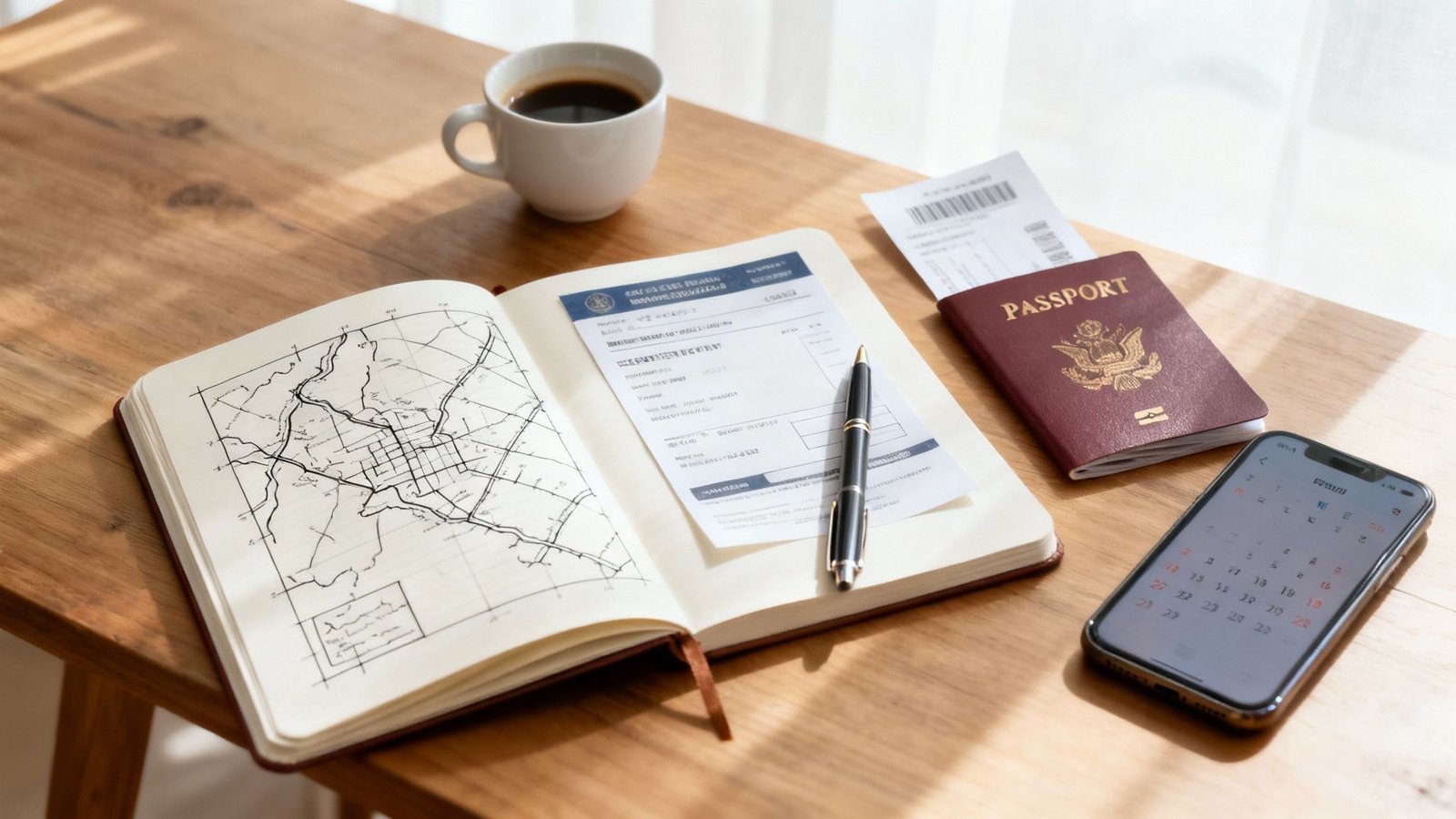
Every truly unforgettable trip begins not with a booking confirmation, but with a simple, dreamy question: What do we really want out of this? Before you even think about flights or hotels, you need to nail down your travel vision. This is the fun part—the dreaming stage where you figure out what kind of experience will get everyone genuinely fizzing with excitement to pack their bags.
Are you picturing total relaxation on a beach, book in one hand, fruity drink with a tiny umbrella in the other? Or is it a high-octane city break, crammed with museums, food tours, and late-night jazz clubs? Maybe you’re craving a deep dive into another culture, wandering through bustling local markets and ancient ruins. Getting this core mission locked in from the get-go makes every other decision a thousand times easier.
Define Your Travel Vibe
The real magic happens when everyone traveling is on the same page. If you’re coordinating with friends or family, agreeing on the trip’s overall theme is the secret to avoiding friction down the road. A great way to kick this off is to have each person jot down answers to a few key questions.
- What are your top three non-negotiables? These are the absolute must-do, must-see, “I’ll-be-devastated-if-we-miss-this” items.
- What’s your ideal pace? Are we talking jam-packed, sunrise-to-sunset days, or a more leisurely, “let’s-see-where-the-day-takes-us” rhythm?
- On this trip, what does “adventure” mean to you? Is it trying exotic street food, hiking a volcano, or just navigating a new subway system?
- What’s one thing you’d be perfectly happy to skip? Knowing what people don’t want is just as important as knowing what they do.
Imagine trying to wrangle a family reunion in the Rockies without a plan—it’s a recipe for chaos, missed connections, and seriously cranky kids. It’s not just a feeling, either; a well-structured itinerary can actually boost trip satisfaction by up to 40%. Travel industry insights consistently show that organized planning directly correlates with higher enjoyment and a greater desire to return. You can explore more of these trends over on Deloitte.com.
To help get this conversation started, I’ve put together a simple “Trip Vision Planner.” It’s a great way to see where everyone’s priorities align and where you might need to find a happy medium.
Trip Vision Planner
| Planning Question | Example for a Family Ski Trip | Example for a Friends’ European Tour |
|---|---|---|
| Trip Goal | Quality family time, improve kids’ ski skills | Experience nightlife, see iconic sights |
| Pace | Moderate: Ski in the AM, relax in the PM | Fast-paced: New city every 2-3 days |
| Top 3 Must-Do’s | Ski lessons for kids, hot tub time, a nice family dinner | Eiffel Tower, Berlin nightclub, pasta in Rome |
| Budget Style | Mid-range: Splurge on a ski-in/ski-out condo | Budget-conscious: Hostels, street food, rail passes |
| Happy to Skip | Fine dining every night | Early morning museum tours |
Seeing it all laid out like this makes it much easier to build a trip that works for everyone.
Balancing Desires for a Group Trip
Let’s walk through a real-world scenario: planning a multi-generational family trip to Italy. You’ve got grandparents who want to soak up ancient history, parents who are dreaming of incredible food and wine, and kids whose primary goal is to consume their body weight in gelato. It sounds complicated, but it’s totally doable.
The trick is to create a “greatest hits” list from everyone’s non-negotiables.
- Grandparents: A guided tour of the Colosseum in Rome.
- Parents: A wine-tasting tour in the Tuscan countryside.
- Kids: A pizza-making class and, of course, daily gelato stops.
Now you can start building a flexible schedule around these anchor activities. Maybe one morning is dedicated to the Colosseum, followed by an afternoon where the kids get their gelato fix while the adults relax at a nearby café. The next day could be the wine tour, with a promise of a fun, kid-approved dinner afterward. It’s all about compromise and collaboration.
The goal isn’t to create a trip that pleases every single person every single minute. It’s about creating a trip where everyone feels heard and gets to experience the moments that matter most to them.
This initial brainstorming phase is absolutely crucial. It transforms a vague idea like “Let’s go to Italy!” into an actionable, inspiring mission. Once you have this shared vision, every other decision—from choosing cities to booking tours—becomes infinitely clearer. You’re not just planning a vacation anymore; you’re co-creating an adventure.
Finding Hidden Gems and Mapping Your Route
Okay, with your travel vision locked in, the real fun begins. This is the treasure-hunting phase—that delicious deep dive into research where you transform a place on a map into a vibrant, living world of possibilities. It’s where you uncover the unique experiences that will make the trip truly yours.
Forget just Googling “top 10 things to do.” We’re on a quest for the good stuff, the kind of moments that stick with you long after you’ve unpacked. This means pushing past the first page of search results and digging for genuine, authentic flavor.
Unearthing Your Must-Do Moments
The best way to start is by casting a wide, creative net. Think of yourself as a travel detective, gathering clues from all over to piece together your perfect adventure.
- Niche Travel Blogs: Hunt down bloggers who share your travel style. Someone focused on budget backpacking will have wildly different tips than a luxury travel writer. Their firsthand accounts are often goldmines, packed with logistical details and personal stories you just won’t find in a glossy magazine.
- Location-Specific Social Media: Instagram and TikTok aren’t just for pretty pictures. Search for specific hashtags (like #TuscanyFoodie or #KyotoHiddenGems) or follow local expat accounts. You’ll find up-to-the-minute recommendations for everything from pop-up markets to the best new gelato spot.
- Old-Fashioned Guidebooks: Don’t sleep on guidebooks! Seriously. While they might not have the very latest restaurant opening, they are brilliant for historical context, neighborhood breakdowns, and professionally vetted walking tours.
Imagine you’re planning that trip to Tuscany. A quick search will point you to the big museums in Florence. But a deep dive could uncover a family-run agriturismo that offers a local-led cooking class, where you learn to make pasta from a real nonna. That’s the kind of hidden gem we’re looking for.
From a Jumble of Ideas to a Logical Flow
Once your list of potential activities is overflowing, it’s time to bring some order to the beautiful chaos. This is where smart routing comes in—the art of connecting the dots in a way that minimizes travel time and maximizes your experience. Wasted hours on a bus are hours you could have spent sipping wine with a view.
The goal is to create a path that flows naturally from one place to the next. Backtracking is the enemy of a relaxed, efficient itinerary.
A simple, free tool like Google Maps is your best friend here. Start by dropping pins on all your must-visit locations. Seeing them all laid out visually makes it immediately obvious what a sensible route looks like.
For a multi-city trip, this is a total game-changer. Let’s say you’re planning a two-week adventure in the Balkans. You might have pins in Ljubljana, Sarajevo, and Kotor. By mapping them, you can see that a route from Slovenia down through Bosnia-Herzegovina to Montenegro makes perfect geographical sense, preventing a zig-zagging mess.
Your itinerary shouldn’t feel like a frantic race against the clock. The secret ingredient is buffer time. Always build in pockets of unscheduled space for the unexpected—a spontaneous detour, a longer-than-planned lunch, or just the simple joy of getting lost on purpose.
Choosing Your Path Between Points A and B
With your route mapped out, the next puzzle piece is figuring out the best way to travel between your destinations. This decision will dramatically shape the vibe of your trip.
Consider your options carefully:
- Scenic Trains: A train ride through the Swiss Alps isn’t just transport; it’s an unforgettable part of the experience itself.
- Budget Flights: For longer distances, a quick, no-frills flight can save you a full day of travel, giving you more time to actually explore.
- Rental Cars: Nothing beats the freedom of a road trip. It gives you the power to stop at tiny villages and roadside viewpoints whenever you please.
Each choice comes with its own trade-offs in time, cost, and experience. By thoughtfully mapping your route and transport, you’re not just creating a schedule; you’re designing the very rhythm and flow of your adventure. As you explore your options, you might find inspiration in different travel styles. Check out our guide on wellness travel to see how the journey itself can be a core part of the experience.
Crafting Your Day-by-Day Adventure Guide
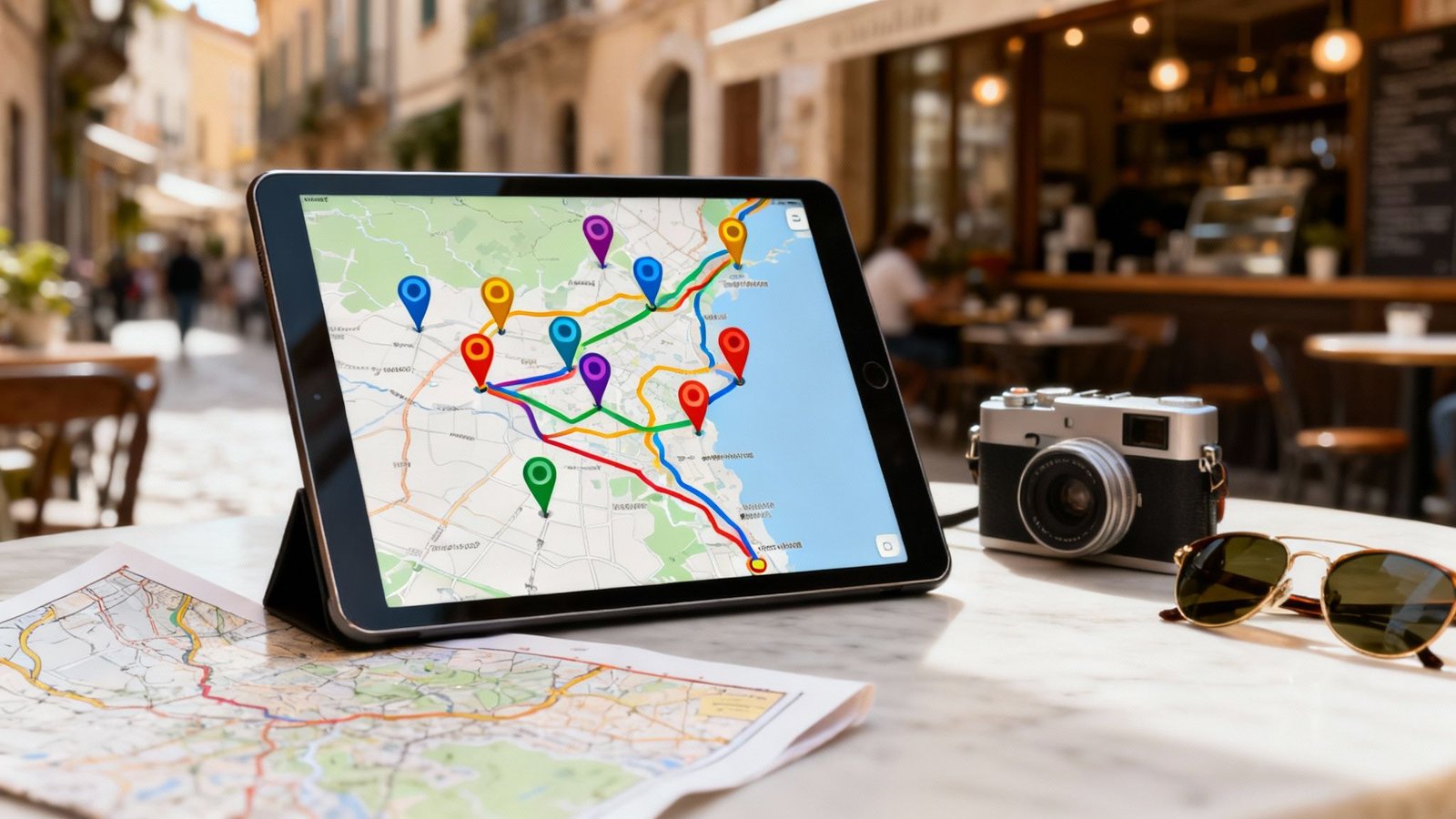
Alright, this is where the magic happens. All that research, all those saved pins, and daydreams are about to come together. We’re shifting from the big-picture map to the day-to-day details, turning that awesome list of ideas into an actual plan.
But here’s a crucial piece of advice: the goal isn’t to schedule every single minute. That’s a surefire recipe for travel burnout. What we’re really building is a flexible guide—one that ensures you hit your must-dos while leaving plenty of room for those wonderful, spontaneous moments that make travel so memorable.
The secret? I call it the “anchor and float” method. It’s wonderfully simple. You anchor each day with one, maybe two, can’t-miss activities. Then you let the rest of the day “float,” giving you the freedom to wander, get lost on a cool-looking street, or say yes to an unexpected invitation. This approach is the key to creating an itinerary that feels both organized and genuinely adventurous.
The Art of Thematic Days and Smart Clustering
The best, most enjoyable itineraries are built around smart logistics. Nothing kills the vibe more than wasting half your day on a subway crisscrossing a city. That’s why I’m a huge fan of grouping activities by neighborhood or theme. It saves you an incredible amount of time and energy, which you can then spend actually soaking in the atmosphere of a place.
Think of it this way. If you’re in Paris, you wouldn’t schedule the Eiffel Tower in the morning, zip over to Montmartre for lunch, and then sprint back across town to the Louvre. It’s geographical madness!
Instead, you’d build a “Louvre & Tuileries Day”:
- Morning (Anchor): A pre-booked 10 AM visit to the Louvre to see the masterpieces without the massive queue.
- Lunch (Float): Find a little food stand in the gorgeous Tuileries Garden for a casual bite, maybe a crêpe with Nutella?
- Afternoon (Float): Meander over to the Musée de l’Orangerie for Monet’s water lilies or just take a lazy stroll along the Seine, popping into whatever little bouquiniste bookstall catches your eye.
This keeps you in one walkable, cohesive area. You see your main sights and still have hours left to discover charming side streets and local shops you never would have found otherwise.
A great itinerary doesn’t just tell you what to do; it shows you the smartest way to do it. Clustering activities geographically is the number one hack for making your days feel relaxed and full, rather than rushed and chaotic.
Tailoring the Pace to Your Travel Style
Let’s be real: not all trips are created equal. A whirlwind European city break has a completely different energy than a chilled-out honeymoon in Bali, and your daily schedule should absolutely reflect that. This is the beauty of DIY itinerary planning—you set the tempo.
Let’s look at how the “anchor and float” method adapts to different travel styles with a couple of real-world examples.
Example 1: The High-Energy City Break (3 Days in London)
This traveler is all about seeing the icons. The pace is fast, but the days are still clustered logically to keep from burning out.
- Day 1 (Westminster Wonders):
- Anchor 1: Morning tour of the Tower of London (pre-booked!).
- Anchor 2: Afternoon visit to Westminster Abbey.
- Float: Walk across Westminster Bridge for the classic Parliament photo op, wander through St. James’s Park, and hunt down a perfect pub for dinner.
- Day 2 (Museums & Markets):
- Anchor: Block out the morning to get lost in the British Museum.
- Float: Grab lunch in Covent Garden, watch the street performers, and browse the quirky shops hidden in Neal’s Yard.
Example 2: The Laid-Back Honeymoon (7 Days in Maui)
Here, the focus is on relaxation and romance. The anchors are fewer and farther between, making downtime the priority.
- Day 3 (Upcountry Exploration):
- Anchor: A sunrise visit to Haleakalā National Park (you’ll need a reservation).
- Float: Enjoy a long, leisurely breakfast in the charming town of Makawao, maybe visit a local farm, then spend the whole afternoon just relaxing by the pool.
- Day 4 (Beach Day Bliss):
- Anchor: A morning snorkeling trip to Molokini Crater.
- Float: The entire afternoon is wide open. Maybe it’s a nap on the beach, a spontaneous drive to find a new cove, or happy hour cocktails with an epic view.
See the difference? Both plans have structure, but one is packed with famous sights while the other is built around slow experiences. That’s the kind of flexibility you’re aiming for.
The Power of Pre-Booking
If there’s one piece of advice I can drill into your head, it’s this: if you really want to do something, book it in advance. This is non-negotiable for world-famous spots like the Anne Frank House in Amsterdam, a timed-entry pass for the Uffizi Gallery in Florence, or a popular luau in Hawaii.
Trying to buy tickets on the day can lead to two major bummers: finding out they’re completely sold out, or wasting 2-3 hours of your precious vacation time standing in a line. Pre-booking lets you waltz right past the queue, securing your spot and turning potential frustration into a smooth, awesome experience.
Once you get those confirmation emails, pop all the details—confirmation numbers, times, addresses—into a simple spreadsheet or a travel app like TripIt. It keeps everything tidy and in one place, ready when you need it.
Managing Your Budget and Booking with Confidence
Alright, let’s talk about the part that often feels a bit intimidating: the money and the moment you have to click “confirm.” But honestly, this is where your dream trip starts to become a reality, and that feeling is incredibly empowering. A brilliant plan deserves a solid financial foundation, and getting your bookings sorted with confidence is the final step before the real adventure begins.
Think of your budget not as a restriction, but as your roadmap to smart spending. It’s the tool that helps you decide where to splurge (that five-star dinner) and where to save (maybe a packed lunch one day), ensuring you have enough cash for the moments that truly matter. It keeps your travel dreams grounded in a happy financial reality.
Building Your Adventure Fund
Your travel budget is so much more than just the cost of a flight and a hotel room. I’ve seen it happen time and time again—people forget the small stuff, and those little expenses can lead to stressful mid-trip ATM runs. A realistic budget accounts for everything, from that life-changing fancy dinner to the unexpected taxi ride across town.
Let’s break down the essential categories for your financial plan:
- The Big Three: These are your non-negotiables—flights, accommodations, and major transport like a rental car or cross-country train tickets. These will almost always be the largest chunks of your budget.
- Daily Delights: This is your day-to-day spending. Think food (from street snacks to sit-down meals), local transit passes, museum entries, and daily activities. For a trip to Lisbon, you might budget €15 for a tram pass, €20 for a walking tour, and €40 for food and drinks.
- Souvenirs & Splurges: Set aside a specific amount for bringing home treasures or for that one big-ticket item you’ve been dreaming of, like a hot air balloon ride or a scuba diving course.
- The “Oops” Fund: Always, always have an emergency fund. Aim for an amount that could cover a last-minute flight change or an unexpected doctor’s visit. It’s the financial safety net you hope you never need but will be incredibly grateful for if you do.
Nailing the Booking Game
With your budget locked in, you can start making it official. Booking your trip is a strategic game, and timing is everything. Securing flights a few months in advance often hits the sweet spot for pricing, while last-minute hotel deals can sometimes pop up for more flexible travelers.
Choosing where to stay is a huge part of the travel experience itself. A cozy, family-friendly apartment might be perfect for a group trip, offering a kitchen and common space. For a romantic escape, a boutique hotel with unique character could be the ideal splurge.
Your itinerary is the ultimate driver of your booking decisions. Knowing your daily plan helps you choose a hotel in a convenient neighborhood, book the right train tickets to get you to your next stop on time, and decide if a multi-day transit pass is a smarter buy than single tickets.
Ground transportation, in particular, requires a bit of foresight. In a city like London with its amazing Tube system, a rental car would be a total nightmare. But for exploring the winding roads of the Scottish Highlands, a car is essential for freedom and discovery. You have to weigh the cost against the convenience for your specific route.
The travel and tourism sector is a massive economic driver. The World Travel & Tourism Council reports it makes up 10% of the global GDP, and domestic leisure travel in the U.S. alone is forecast to reach $895 billion. Your trip is a part of this huge, interconnected world, and a well-planned itinerary helps you make the most of it. You can learn more about these powerful global economic impact trends on WTTC.org.
Making all these decisions can feel overwhelming, but you don’t have to do it alone. Sometimes, getting an expert perspective can unlock value you didn’t even know existed. For more insights on this, check out our guide on the perks of working with a travel pro.
Bringing It All Together: Your Final Travel Toolkit
You’ve put in the hours—dreaming, researching, booking. Now for the fun part: pulling everything together into a single, polished, and adventure-ready document. This is your master key, the one place that turns all that careful planning into a seamless experience on the ground.
Honestly, the best format for your itinerary is whatever works for you. There are no rules here. If a detailed spreadsheet brings you organizational joy, go for it. If a beautifully designed document in a tool like Canva makes the trip feel more real and exciting, that’s the way to go. The only thing that matters is getting all your critical information in one spot, ready at a moment’s notice.
What Your Final Itinerary Needs
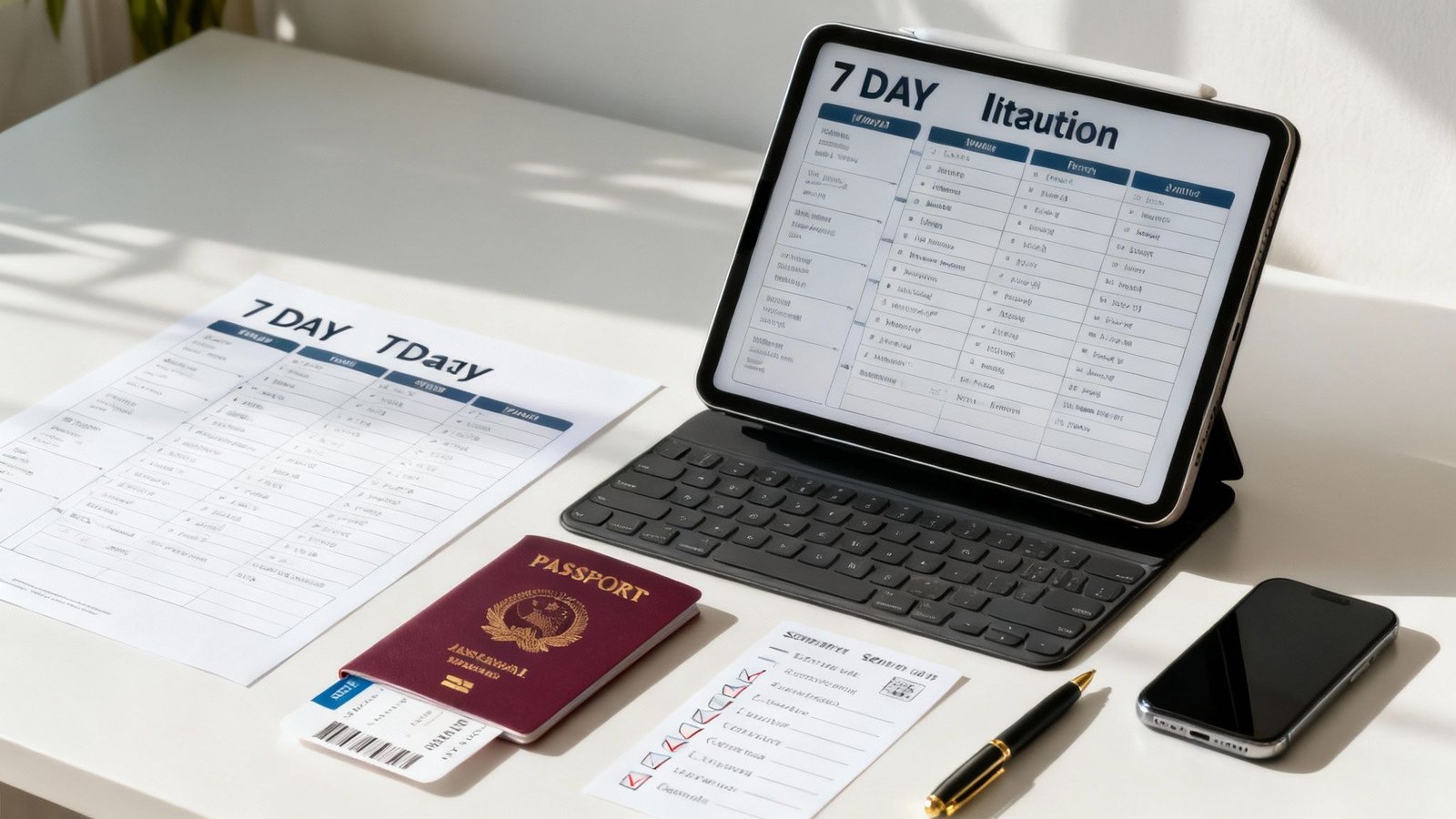
Think of your finished itinerary as your trip’s command center. It needs to be scannable, clear, and have dedicated spaces for all the essentials. We’ve even created a downloadable template to get you started!
Here’s a little peek at what our template includes, using a hypothetical 7-day family trip to Costa Rica as an example:
- Flight & Accommodation Details: Confirmation numbers, check-in times, and the full address of that rainforest eco-lodge you booked near La Fortuna. (e.g., Flight AA123, Conf #XYZ789; Tabacón Thermal Resort, 123 Rainforest Rd, La Fortuna).
- Day-by-Day Schedule: A clear but flexible plan. Something like, “Tuesday Morning: 9 AM Ziplining Tour (pre-booked, confirmation #12345). Afternoon: Free time to explore La Fortuna waterfall or just chill.”
- Transportation Info: All the details for your rental car pickup at SJO airport, including the company name and your reservation number. (e.g., Adobe Rent a Car, Conf #R45678).
- Emergency Contacts: The number for the local embassy, your travel insurance provider, and a key contact back home.
Your final document is more than just a schedule; it’s peace of mind. Having everything from your flight number to your hotel address in one spot frees up your mental energy so you can actually enjoy the moment you’re in.
The Pre-Departure Checklist
With your itinerary polished and ready to go, there are just a few final tasks to tick off the list. This last-minute check ensures a smooth departure and helps you handle any little surprises that might pop up on the road.
- Share Your Plans: Email a copy of your full itinerary to a trusted family member or friend. It’s a simple safety measure that makes sure someone always knows your general whereabouts.
- Go Digital & Analog: Save a PDF of your itinerary to your phone and cloud storage (like Google Drive). But also—and this is crucial—print a physical copy. A dead battery or spotty Wi-Fi shouldn’t be able to derail your plans.
- Download Offline Maps: Before you go, open the Google Maps app and download the maps for the cities and regions you’ll be visiting. This is an absolute game-changer for navigating without burning through international data.
- Organize Your Documents: If you’re still sorting out your travel documents, our guide on what to pack for study abroad has a fantastic checklist that works for pretty much any international trip.
- Confirm Everything: Give your flight times and major bookings one last look-over. A quick check a day or two before you leave can save you from any last-minute headaches.
Common Questions About Itinerary Planning
Even after years of planning trips, a few questions always seem to pop up. Let’s tackle some of the most common head-scratchers that come up when you’re putting an itinerary together. My goal is to make it feel less like a puzzle and more like the start of a great adventure.
How Far in Advance Should I Plan?
This is a big one, and the answer really depends on where you’re going. For major international trips or travel during a popular season (think summer in Europe), I always recommend starting the process 6-9 months out. This gives you the best shot at nabbing good flights and unique places to stay without paying a premium.
But if you’re planning a domestic getaway or a trip in the off-season, 3-4 months is usually plenty of time. The trick is to lock in the big-ticket items first—flights, popular tours, that one special hotel—and then you can have fun filling in the daily details closer to your departure date.
What if My Group Has Different Interests?
Ah, the classic travel conundrum! I’ve found the secret ingredients are always communication and compromise. A great way to start is by having everyone list their top two or three “must-do” activities. You can then build the itinerary around these anchor points, making sure everyone gets a moment they’re genuinely excited about.
The real magic, though, is scheduling blocks of “free time” into the itinerary. This empowers smaller groups or individuals to chase their own interests, whether that’s exploring an art gallery or finding the perfect coffee shop. A great plan balances shared memories with personal freedom.
Should I Schedule Every Single Minute?
Please don’t! That’s the quickest way to turn a dream vacation into a stressful checklist. In my experience, the most magical itineraries are structured but wonderfully flexible.
I suggest planning one or two key activities per day and leaving the rest of the time open for wandering, long lunches, or unexpected discoveries. After all, the best travel stories often come from the moments you couldn’t possibly have planned for.
Feeling like you need a hand turning your travel dreams into a perfectly polished plan? At Those Who Wander, LLC, we specialize in crafting custom itineraries that match your unique style. Let us handle the details so you can focus on the adventure. https://thosewhowander.online
Pingback: Explore big island hawaii scuba: Manta Dives, Lava Tubes & Kona Reefs