
How to Plan International Travel: Let’s Make Some Magic Happen in 5 Steps
Every grand adventure starts as a daydream. Maybe it’s the snowy peaks of the Alps calling your family for a ski trip, or a sun-drenched Balinese beach that seems perfect for a romantic escape. This is the fun part, where your travel vision takes shape and anything feels possible.
But turning those daydreams into a solid plan means getting down to brass tacks. It really boils down to answering two big questions: where and when? Let’s get this show on the road.
Your Travel Blueprint: Dream It and Do It
This initial phase is all about transforming that spark of an idea into an actionable blueprint. It sets the foundation for everything that follows, from budgeting to booking your first flight.
Choosing Your Destination and Timing
The perfect destination is one that genuinely gets everyone in your group fizzing with excitement. Are you after heart-pumping adventures like zip-lining through Costa Rican rainforests? Maybe a deep cultural dive, wandering through Rome’s ancient streets, is more your speed. Or perhaps pure, unadulterated relaxation is the goal, with nothing on the agenda but a good book and a seaside view.
Once you have a “where,” the “when” becomes absolutely critical. Timing is everything, and a few key factors can make or break a trip:
- Weather Patterns: Do your homework on the typical climate for your desired dates. A trip to Southeast Asia during monsoon season is a dramatically different (and soggier!) experience than visiting during the dry season.
- Peak vs. Shoulder Season: Traveling during peak season usually means fantastic weather but also bigger crowds and higher prices. The shoulder seasons—the periods just before or after peak—can be the sweet spot, offering fewer tourists, lower costs, and still-great weather. It’s like finding a secret passage to paradise.
- Local Festivals and Events: Planning your trip around a local festival can create incredible, lifelong memories. On the flip side, you might want to actively avoid major holidays that could lead to closures, sold-out hotels, and travel chaos.
This simple infographic breaks down how a trip evolves from a fuzzy idea to a concrete plan.
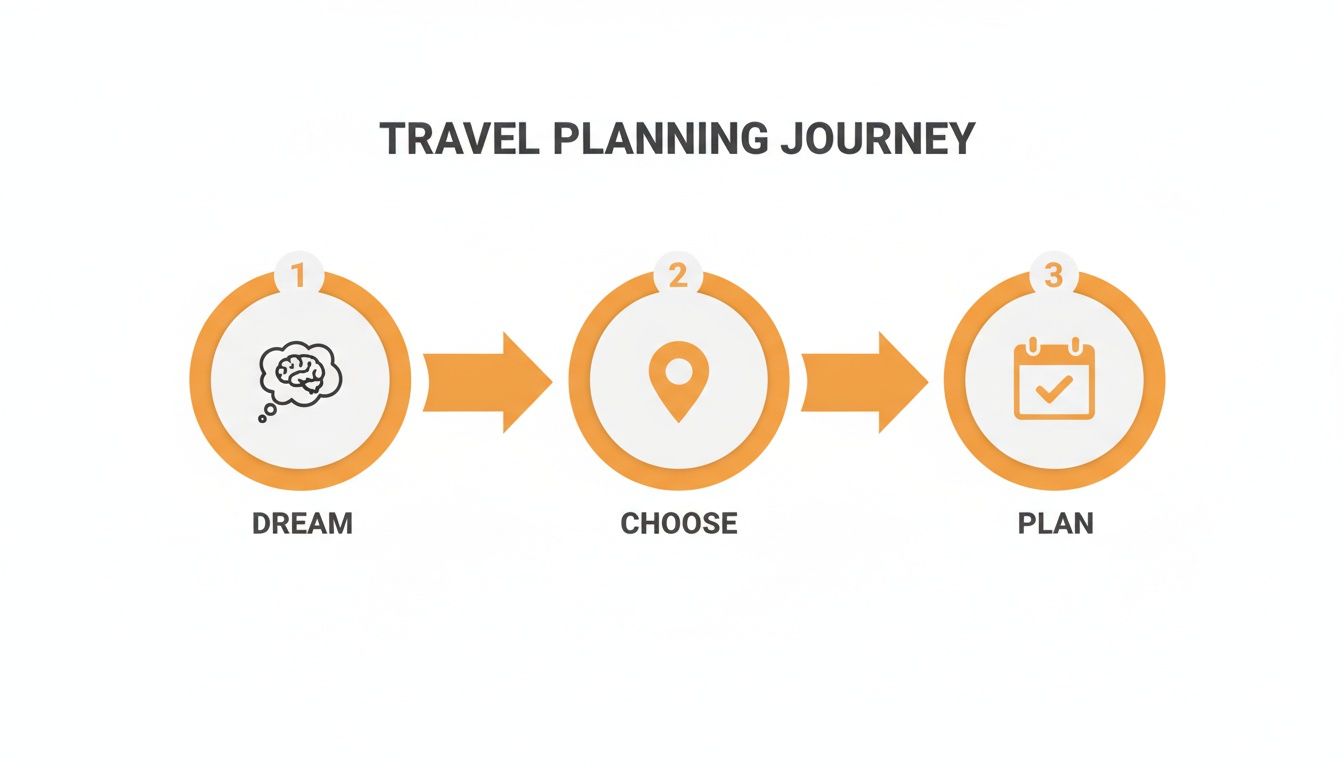
It’s a great visual reminder that every successful journey moves from a dream to a choice, which then opens the door for all the detailed planning.
Aligning Schedules and Setting a Duration
Coordinating schedules for a multi-family getaway or a large group of friends can sometimes feel like herding cats, but it’s totally doable with a bit of early communication. Start a group chat, create a shared digital calendar, or use a simple online poll to nail down a set of dates that works for everyone.
A great itinerary balances exciting activities with much-needed downtime. Rushing from one landmark to the next is a fast track to vacation burnout. Aim for a pace that allows for both planned excursions and spontaneous, magic-making discoveries.
The length of your trip should reflect both your destination and your travel style. A whirlwind weekend in Paris is a world away from a two-week deep dive into Japan. As a general rule of thumb for international trips, 8-10 days is a good starting point. This accounts for travel time on each end and still leaves you with a solid week for exploring.
Getting a head start on planning is more important now than ever. In just the first nine months of 2025, over 1.1 billion tourists jetted across borders, a figure on track to blow past pre-pandemic records. This travel boom means popular spots are booking up fast, making early planning non-negotiable if you want to lock in your dream trip.
If orchestrating all these moving parts feels overwhelming, remember you don’t have to go it alone. Exploring the benefits of using a travel agent can show you exactly how a professional can take your wishlist and turn it into a seamless, unforgettable journey.
Navigating Passports, Visas, and Health Essentials
Alright, let’s talk about the slightly-less-glamorous but absolutely essential stuff: the paperwork and prep that stand between you and that first Aperol spritz in Italy. Think of this as your official permission slip to explore the globe. It might seem like a chore, but tackling it early means smooth sailing later.
This part of planning international travel is non-negotiable, and getting it right from the start saves a world of headaches. We’re here to demystify the documents and make sure you’re ready for anything.
The All-Important Passport Check
First things first: locate your passport. Dust it off and open it to the photo page. Now, check that expiration date. Many countries enforce the “six-month validity rule,” meaning your passport must be valid for at least six months beyond your planned departure date from their country.
Don’t let this sneaky rule catch you off guard! If your passport is cutting it close, start the renewal process immediately. Standard processing times can stretch for weeks or even months, so this is one task you cannot procrastinate on.
Unraveling the World of Visas
The word “visa” can sound intimidating, but it’s really just official permission from a country to enter for a specific purpose. Do you need one? It depends entirely on your citizenship and your destination. Your first stop should always be a quick search on your destination country’s official embassy or consulate website.
Here are a few scenarios where visas often come into play:
- Students Studying Abroad: If you’re planning a semester in Spain, you’ll almost certainly need a student visa, which has its own specific set of application requirements.
- Long-Term Stays: A two-week vacation in France won’t require a visa for many travelers, but a three-month sabbatical might push you into visa territory.
- Certain Nationalities: Entry requirements vary wildly depending on your passport’s country of origin.
Don’t just assume you’re good to go. Visa requirements are strict, and showing up at the airport without the proper documentation is a surefire way to end your trip before it even begins. Always verify the rules for every single passport holder in your group.
Picture your college crew or sports team coordinating an epic trip abroad. Now, consider this: U.S. international arrivals are forecast to climb 6.5% to 77.1 million in 2025 and surge another 10.2% to 85 million in 2026. However, visa hurdles can slow things down, highlighting why partnering with a consultancy like Those Who Wander, LLC, is a game-changer for streamlining group applications and bookings. Explore more on these travel trends and forecasts to understand why proactive planning is key.
Your Pre-Trip Health Checklist
Staying healthy on your trip starts long before you board the plane. Depending on where you’re headed, you might need specific vaccinations or preventative medications. The CDC’s Travelers’ Health website is an excellent resource for country-specific recommendations.
Schedule a chat with your doctor or a travel clinic at least four to six weeks before your departure. This gives you plenty of time to get any necessary shots, which sometimes require multiple doses spaced out over several weeks.
This is also the perfect time to:
- Refill any prescription medications you take, ensuring you have enough for your entire trip, plus a little extra just in case.
- Get a doctor’s note for any prescribed medications, especially if they are liquids or controlled substances.
- Discuss any health concerns specific to your destination, like altitude sickness or food and water safety.
Managing these details—passports, visas, and health—is where a travel advisor truly shines. They take the guesswork out of the process, ensuring every member of your group has the right documents and is medically prepared for the adventure ahead.
Mastering Your Money and Booking Your Trip
Alright, let’s get into the exciting part—turning those pins on your map into actual, booked-and-paid-for confirmations. This is where the dream starts to feel real.
Some people hear the word “budget” and immediately think of spreadsheets and restrictions. I think of it as empowerment. A good budget is your roadmap, the tool that turns “someday” into “next month” by showing you exactly how to make it happen without giving up the experiences you’re really after.
Building Your Travel Budget
I like to break down a trip budget into three simple buckets. Thinking about it this way keeps things from getting overwhelming and helps make sure you don’t get hit with surprise costs later on.
The Big Tickets: These are your non-negotiable, major upfront costs. Think round-trip airfare, all your accommodations, and any big pre-booked activities like multi-day tours, festival passes, or ski lift tickets.
The Daily Delights: This is your walking-around money. It’s for everything from your morning coffee and croissant to museum entries, subway passes, amazing local dinners, and that perfect souvenir you stumble upon in a little market.
The Just-in-Case Fund: Life happens, even on vacation. This isn’t for emergencies (that’s what insurance is for), but it’s a small buffer—maybe 10-15% of your total budget—for unexpected fun, like a last-minute concert ticket, or for minor hiccups, like needing a taxi because you missed the last train.
Estimating your “Daily Delights” can feel like a shot in the dark, but a little research goes a long way. Hop online and find out the average cost of a meal or a beer in your destination. If you know a casual dinner in Lisbon is about €15-20, you can build a realistic daily food budget from there.
To help visualize this, here’s a sample budget for a hypothetical trip.
Sample International Trip Budget Breakdown
This table outlines a sample budget for a 10-day European trip for two people, showing how costs can be allocated across different categories. Use it as a starting point to plan your own expenses.
| Expense Category | Estimated Cost (Per Person) | Budgeting Tip |
|---|---|---|
| Airfare | $900 | Book 2-6 months out for the best deals. Fly mid-week. |
| Accommodation | $1,000 ($100/night) | Consider apartments or guesthouses for better value. |
| Food & Drink | $750 ($75/day) | Mix restaurant meals with market finds and picnics. |
| Activities & Tours | $400 | Pre-book major attractions to save time and money. |
| Local Transport | $150 | Buy multi-day transit passes instead of single tickets. |
| Just-in-Case Fund | $320 (10%) | Set aside for spontaneous fun or small emergencies. |
| Total Estimated Cost | $3,520 | Track spending with an app to stay on course. |
Remember, these numbers are just a guide. You might splurge on a fancy hotel or save by staying in hostels and cooking your own meals. It’s all about making the trip work for you.
The Art of Booking Flights
Finding a good flight deal can feel like playing the stock market, but you don’t need to be a Wall Street trader to win. The key is a mix of patience and being ready to act fast when a great price pops up.
And forget that old myth about booking on a Tuesday at midnight. Airline pricing algorithms are way too sophisticated for that now.
For international trips, the sweet spot is generally two to six months in advance. Any earlier, and the airlines might not have released their best fares. Any later, and you’re fighting last-minute demand, which always drives prices up.
Pro Tip: Use technology to your advantage. Set up flight alerts on platforms like Google Flights or Hopper. They’ll watch the prices for you and send an email the moment they drop, so you can book knowing you got a solid deal.
Flexibility is your best friend here. Flying on a Tuesday or Wednesday is almost always cheaper than a Friday. I’ve seen shifting a trip by just one day save hundreds of dollars. That’s a lot of extra gelato.
Finding Your Perfect Home Away From Home
Where you stay sets the whole vibe for your trip. Are you picturing a five-star hotel with a rooftop pool? A cozy Airbnb in a quiet neighborhood? Or a charming guesthouse run by a local family? There’s no wrong choice—it’s about what experience you want.
Here are a few ways to think about it:
- Hotels: They offer pure convenience—daily housekeeping, a concierge for recommendations, and maybe a gym or restaurant. They’re perfect when you want a completely hassle-free base of operations.
- Vacation Rentals (Airbnb/Vrbo): These are fantastic for families or groups. Having a kitchen to make breakfast or pack lunches can save a ton of money, and you get a feel for what it’s like to actually live there.
- Boutique Guesthouses or B&Bs: You often get a more personal, intimate experience. The hosts are usually dying to share insider tips about their city, which can lead to some of the best discoveries.
When you’re booking, look beyond just the nightly rate and check the map. That cheaper hotel an hour outside the city might seem like a steal, but you could end up paying for it in lost time and transportation costs.
With your budget sorted and your main bookings locked in, the trip is really taking shape. This is also the perfect moment to protect your investment. Life is unpredictable, so it’s always smart to check out your travel insurance options to make sure you’re covered for anything from a cancelled flight to a medical issue. With that handled, you’re truly ready to go.
Crafting Your Perfect Itinerary: Adventures and Pacing
With your flights and accommodations locked in, you’ve officially built the skeleton of your trip. Now for the really fun part: adding the heart and soul. A great itinerary is so much more than a rigid schedule; it’s the story of your adventure, a flexible blueprint for making incredible memories.
This is where you weave together iconic sights with authentic, off-the-beaten-path experiences. It’s about creating a rhythm for your trip that feels exciting but never exhausting. Let’s make some magic happen.

Balancing Big Sights with Local Charm
Every destination has its must-see landmarks—the Eiffel Tower in Paris, the Colosseum in Rome. You’re going all that way, so of course, you should see them! The trick is to anchor your days around these big-ticket items while leaving plenty of room for the smaller, spontaneous moments that often become the real highlights.
A great way to approach this is to dedicate the morning to a major attraction when you have the most energy and the crowds might be lighter. Then, plan your afternoon around simply exploring the surrounding neighborhood. It’s a simple shift that turns a logistical challenge into an opportunity for pure discovery.
For instance, after a morning at the Louvre, instead of rushing across town, just spend the afternoon wandering through the Tuileries Garden. Pop into little bakeries. See where the cobblestone streets take you. That’s how you find the hidden gems.
The Art of Pacing
One of the biggest mistakes I see travelers make is trying to cram too much in. An overstuffed itinerary is just a recipe for vacation burnout. The secret to a truly refreshing trip is mastering the art of pacing. Not every day needs to be a high-energy whirlwind.
I like to think of an itinerary in terms of energy levels:
- High-Energy Days: These are for the big adventures. Think a full-day guided ski tour in the Alps or a long hike to a scenic viewpoint.
- Moderate-Energy Days: Perfect for city exploration, museum hopping, or a walking food tour. You’re active but not totally pushing your limits.
- Low-Energy Days: You have to intentionally plan for relaxation. This could be a morning at a local café, an afternoon reading by the pool, or a leisurely day at the beach.
Building in downtime isn’t a sign of a “wasted” day; it’s a smart strategy for staying energized and present for the entire trip. It gives you the flexibility to say “yes” when an unexpected opportunity comes along.
When traveling with a group, pacing becomes even more critical. Everyone has a different travel style and battery life. If you’re coordinating for a larger party, our guide on how to plan a group trip has some practical tips for keeping everyone happy and the itinerary balanced.
A Sample Family Itinerary for Costa Rica
Let’s put these ideas into practice. Imagine a 7-day family adventure in Costa Rica, a destination that perfectly blends thrilling activities with laid-back “pura vida” vibes. This itinerary is a great example of how to mix different experiences and paces to keep everyone, from kids to grandparents, engaged and happy.
Day 1-2: Arrival and La Fortuna Adventure
- Day 1: Arrival & Hot Springs Soak. Land in San José, grab your rental car, and drive to your eco-lodge near the Arenal Volcano. The reward for your travel day? A relaxing evening soak in the hotel’s natural hot springs. (Low Energy)
- Day 2: Flying High & Waterfall Swim. Morning zip-lining tour through the rainforest canopy (get ready to scream with delight!). In the afternoon, take a guided hike to the La Fortuna Waterfall for a refreshing swim at its base. (High Energy)
Day 3-4: Chocolate, Culture, and Cloud Forests
- Day 3: Become a Chocolatier. Visit a local, family-run cacao farm for a hands-on chocolate-making tour. You’ll learn the whole process from bean to bar—and yes, there will be samples! The afternoon is free to explore the town of La Fortuna. (Moderate Energy)
- Day 4: Walk in the Clouds. Travel to the mystical Monteverde Cloud Forest. Check into your hotel and take a magical evening walk on a suspended bridge tour to spot nocturnal wildlife like sloths and colorful tree frogs. (Low Energy)
Day 5-7: Sloths, Surf, and Sandcastles
- Day 5: Manuel Antonio Bound. Morning guided hike in the Monteverde Cloud Forest Reserve to spot the elusive Resplendent Quetzal. In the afternoon, travel to the Pacific coast town of Manuel Antonio. (Moderate Energy)
- Day 6: Beach Bliss. A full day dedicated to the stunning beaches of Manuel Antonio National Park. Look for monkeys and sloths in the trees, build epic sandcastles, and swim in the turquoise ocean. Optional surf lesson for the more adventurous! (Low Energy)
- Day 7: Adiós, Costa Rica! One last gallo pinto breakfast before heading to the airport for your flight home, memories (and maybe some chocolate) in hand.
This blend of adventure, culture, and pure relaxation ensures you experience the best of the country without feeling like you’re in a constant rush. It’s a flexible framework that creates structure but leaves plenty of room for spontaneity—the perfect recipe for an unforgettable international trip.
7. The Final Countdown: Packing, Money, and Connectivity
The countdown is officially on! With the big bookings handled, it’s time to dial in the final touches—those crucial details that transform a good trip into a seamless one.
This is where we tackle the three pillars of travel readiness: what to pack, how to pay for things on the ground, and how to stay in touch with the world (or blissfully disconnect from it). Let’s get you ready for takeoff.

The Art of Smart Packing
Forget stuffing your entire wardrobe into a suitcase and praying it closes. Smart packing is a strategy, and the goal is to bring only what you need to feel comfortable, prepared, and confident. The real secret is to pack for the trip you’re actually taking, not the one you’re daydreaming about.
Start by making a list tailored specifically to your itinerary. A week of skiing in the Alps requires a completely different set of gear than two weeks exploring the temples and cities of Japan.
To maximize every square inch of space and minimize wrinkles, rolling your clothes instead of folding them is a total game-changer. I also swear by packing cubes for organizing items by category—one for tops, one for bottoms, another for socks and underwear. It makes finding things a breeze.
Pro Tip: Lay out everything you think you need to bring… and then put a third of it back. We almost always overpack, and trust me, lugging a heavy suitcase through cobblestone streets or up five flights of stairs is nobody’s idea of a vacation.
To give you a better idea, what’s essential can change dramatically depending on where you’re headed.
Essential Packing Checklist By Travel Type
Here’s a quick comparison to get your packing list started, showing how your must-haves might differ.
| Item Category | Beach Vacation | Adventure Trip | City Exploration |
|---|---|---|---|
| Footwear | Sandals, water shoes | Hiking boots, trail runners | Comfortable walking shoes |
| Outerwear | Light cover-up, rain jacket | Waterproof shell, fleece | Stylish trench coat or jacket |
| Essentials | Swimsuits, reef-safe sunscreen | Moisture-wicking layers, first-aid kit | Portable charger, daypack |
| Nice-to-Have | Waterproof phone case | Headlamp, trekking poles | Reusable water bottle |
This table is just a starting point, of course. Always check the weather forecast right before you pack and adjust accordingly!
Sorting Out Your On-the-Ground Finances
Navigating money in a foreign country doesn’t have to be a headache. The best approach I’ve found is a mix of plastic and paper.
Use a credit card with no foreign transaction fees for larger purchases like hotels, nice dinners, and pre-booked tours. This not only gives you purchase protection but also typically secures the best exchange rate without you having to think about it.
For smaller expenses—think street food, local market finds, or tips—you’ll want some local currency. Instead of exchanging a huge sum at the airport where rates are notoriously awful, just withdraw cash from a local ATM once you arrive. You’ll get a much better rate, even if your bank charges a small fee.
Before you leave, make one crucial phone call: notify your bank and credit card companies of your travel dates and destinations. This simple five-minute step prevents their automated fraud systems from freezing your accounts when they see a sudden charge from halfway around the world.
Staying Connected Abroad (Or Not)
Your final decision is about how plugged-in you want to be. For some, staying in touch is a necessity for work or family. For others, a digital detox is the whole point of the trip.
Here are your main options for staying connected:
- International Phone Plans: Many U.S. carriers like AT&T or Verizon offer daily passes that let you use your domestic plan abroad for a flat fee, often around $10 per day. It’s incredibly convenient but can get expensive on longer trips.
- eSIMs: This is often the easiest and most affordable option for data. Apps like Airalo let you buy a data-only plan for your specific destination before you even leave home. You can activate it the moment you land, giving you instant access to maps and messaging apps.
- Go Wi-Fi Only: If you’re on a tight budget or truly want to unplug, you can just rely on free Wi-Fi at your hotel, cafes, and public spaces. Just be sure to download offline maps (Google Maps has this feature) and translation apps ahead of time so you can navigate without a constant connection.
With your bags packed, your money sorted, and your connectivity plan in place, you’re truly ready. All that’s left is to get to the airport and let the adventure begin.
Got a Few Last-Minute Questions?
It’s totally normal to have a few “what-ifs” swirling around before a big international trip. Honestly, planning a global adventure is a huge undertaking, and even the most seasoned travelers have those last-minute details to iron out.
We get questions all the time from travelers just like you. So, we’ve gathered the most common ones and have our team of experts weigh in with some practical, no-nonsense answers. Let’s get these final pieces sorted so you can get back to dreaming about the adventure ahead.
How Far in Advance Should I Really Start Planning?
For most international getaways, that 6-9 month window is the sweet spot. It gives you plenty of breathing room to hunt down good flight deals before they skyrocket, lock in your first-choice hotels, and get all the paperwork done without the last-minute stress.
But if you’re dreaming bigger—say, a multi-country tour of Europe or a highly specialized African safari—you’ll want to push that timeline back to 10-12 months out. That extra lead time is what really lets a travel advisor work their magic, securing early-bird perks and meticulously piecing together an itinerary that hits every single thing on your wish list.
Is It Actually Worth Using a Travel Advisor?
Look, for a simple weekend trip, you can absolutely DIY it. But when the journey gets more complex or it’s a true milestone trip, a great travel advisor becomes your single most valuable asset. They’re not just booking agents; think of them as your personal project manager for crafting an unforgettable experience.
It’s a game-changer to partner with an expert for things like:
- Group Travel: Trying to coordinate a big family reunion, a corporate retreat, or a sports team trip is a masterclass in logistics. An advisor handles all of it, so you can just show up and enjoy the ride.
- Unfamiliar Destinations: Heading somewhere way off the beaten path? An advisor’s local connections and on-the-ground knowledge are priceless for safety, finding authentic experiences, and just making sure everything runs smoothly.
- Adventure Travel: If your trip involves specialized guides for things like backcountry skiing or scuba diving, an advisor makes sure you’re linked up with vetted, top-tier professionals you can trust.
At the end of the day, if you’re short on time, feeling overwhelmed by a million online options, or just want the peace of mind that an expert has your back, using an advisor is a no-brainer.
What’s the Best Way to Handle Money When I’m Abroad?
Forget the old-school move of exchanging a huge wad of cash at the airport. These days, the smartest way to manage your money abroad is a simple, three-part strategy.
First, your workhorse will be a credit card with no foreign transaction fees. Use it for bigger purchases like hotels, restaurant meals, and tour bookings. It’s secure and almost always gives you the best exchange rate.
Next, you’ll definitely want some local cash for the small stuff—street food, market souvenirs, tips for your guide. The best move here is to withdraw small amounts from a local ATM once you’ve arrived. You’ll get a way better rate than any currency exchange counter, hands down.
Finally, and this is a big one: always notify your bank of your travel dates and destinations before you leave. It’s a quick phone call that prevents their fraud systems from seeing a charge from another continent and freezing your cards right when you need them most.
What Are the Most Common Planning Mistakes People Make?
Learning how to plan a big trip often means learning from a few common slip-ups. One of the absolute biggest mistakes we see is not checking passport validity early enough. That six-month rule is very real in many countries, and discovering your passport is about to expire can derail a trip before it even starts.
Another classic error is jam-packing the itinerary. Scheduling every single minute of your day is the fastest way to burn out on vacation. You have to leave room for the spontaneous magic—the little detours and unexpected discoveries that often become the best memories.
A lot of travelers also forget to budget for all the little on-the-ground costs. Think local bus fare, city tourist taxes, and tipping. These things seem small, but they add up fast and can easily throw a carefully planned budget out of whack.
And lastly, a major pitfall is skipping out on comprehensive travel insurance. It’s your ultimate safety net. It covers everything from a canceled flight or lost luggage to a serious medical emergency. It’s the one thing you buy hoping you’ll never have to use it, but you’ll be incredibly thankful you have it if you do.
Ready to turn that travel dream into a perfectly planned reality, without all the headache? The team at Those Who Wander, LLC is here to build a journey that’s uniquely you. We handle the details so you can focus on making memories. Let’s start planning your next adventure together. Visit us at https://thosewhowander.online to get started.
Pingback: Those Who Wander, LLC
Pingback: Those Who Wander, LLC