
Discover How to Plan a Group Trip: Expert Tips for Budgeting and Itineraries
Getting a group trip from a flurry of “we should totally…” texts to an actual booked-and-paid-for reality is a special kind of magic. The trick? Nailing the vibe before a single dollar is spent or a destination is picked. It’s the difference between a trip that flows effortlessly and one that’s a constant tug-of-war. Let’s get this adventure off the ground!
Kicking Off Your Epic Adventure
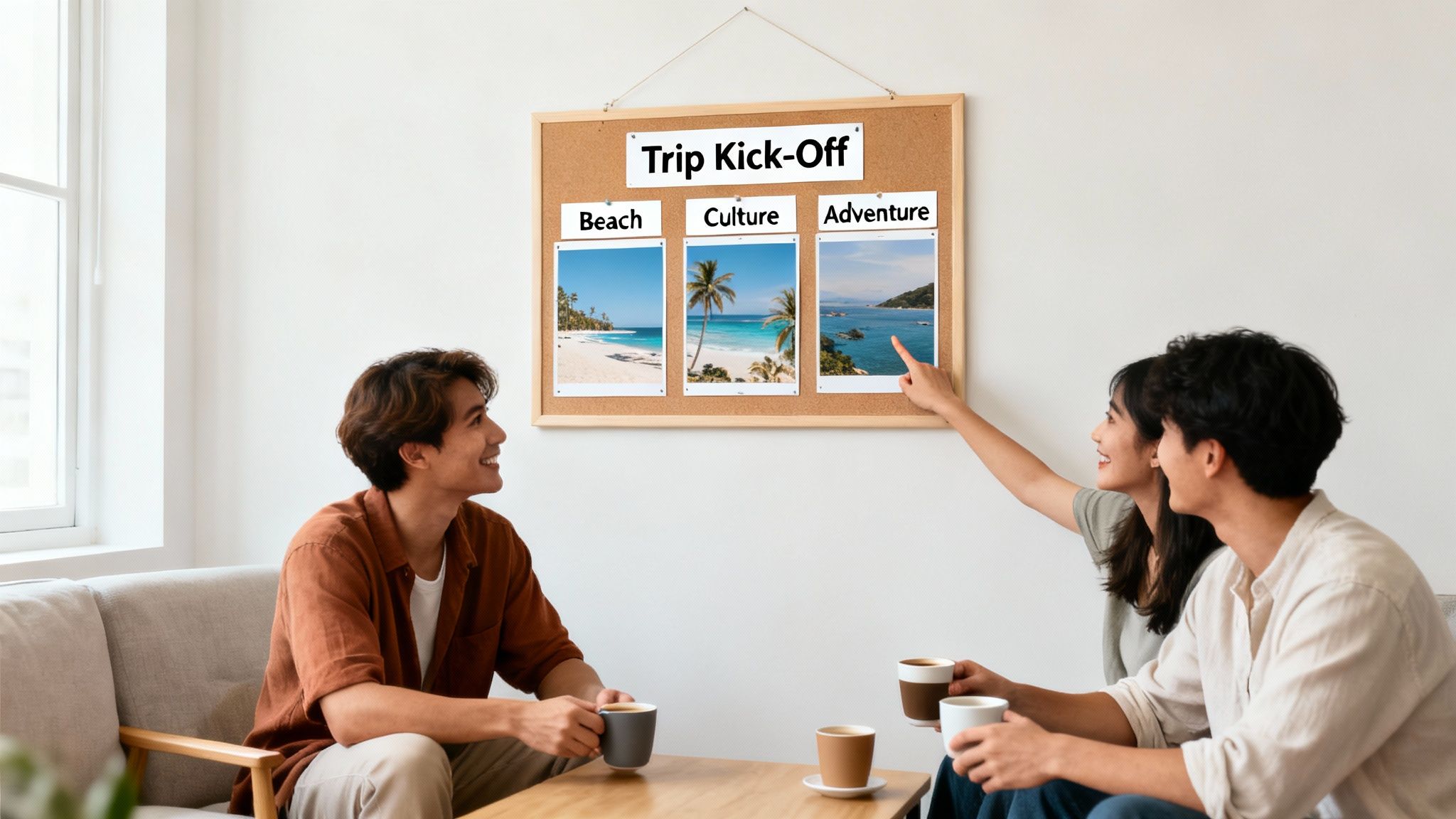
Before anyone even dares to open a flight comparison website, get the group together for a “Trip Kick-Off” chat. This isn’t about locking down a minute-by-minute itinerary. It’s a casual, no-pressure brainstorm to make sure everyone’s dreaming of the same kind of getaway.
Think about it: one friend might be picturing piña coladas and zero obligations on a quiet beach. Meanwhile, another is mapping out a whirlwind tour of historical sites and museums. Both are incredible trips, but they are worlds apart. A simple conversation upfront prevents these fundamental mismatches from bubbling up as resentment later on.
Finding Your Group’s Travel Style
First things first: what’s the personality of this trip? Is it a high-octane adventure or a chilled-out escape? Getting this sorted smooths out every decision that follows.
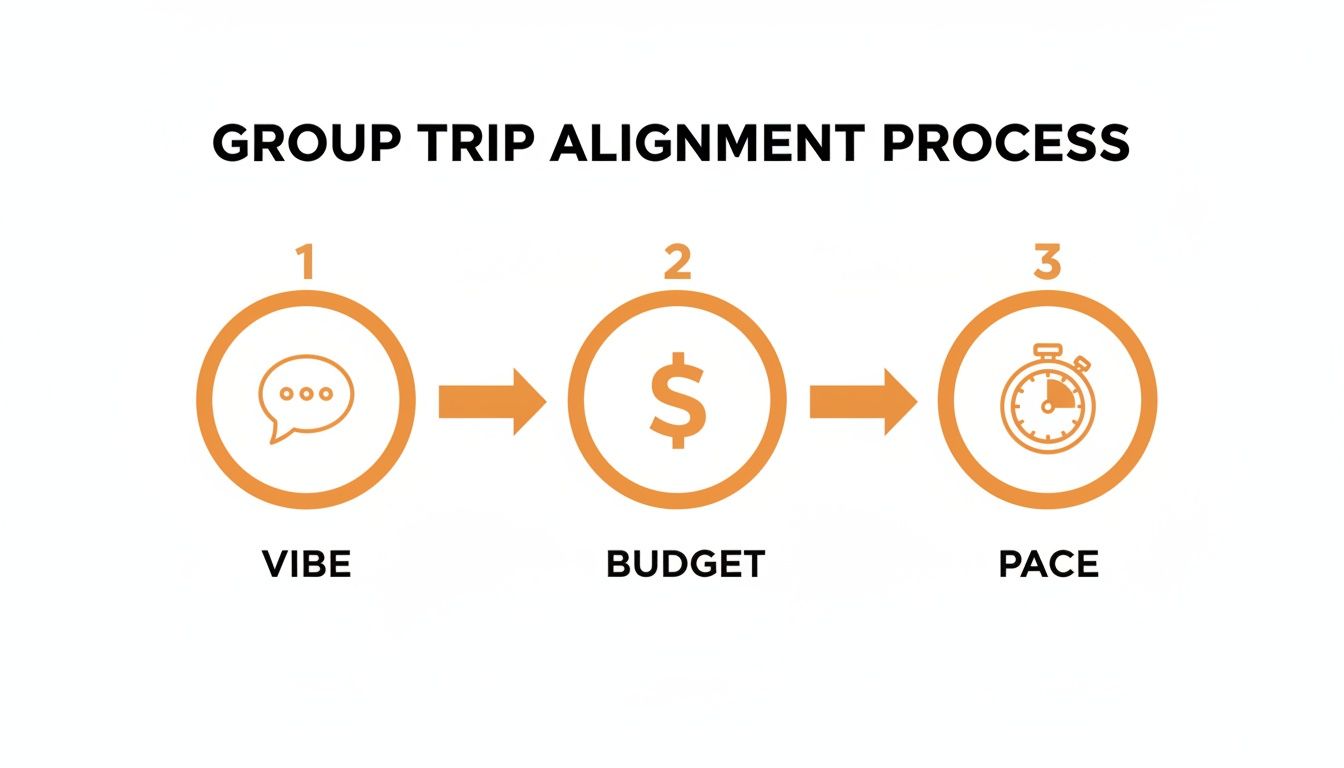
You’ll want to touch on three key pillars:
The Vibe: What’s the whole point of this trip? Are we looking for total relaxation, a cultural deep-dive, a non-stop party, or a rugged adventure? Aligning on the mood ensures the activities and destination actually fit the goal
The Budget: Time to talk money. Keep it light, but be direct. Agreeing on a comfortable per-person spending range—whether that’s “hostels and street food” or “let’s live it up”—is crucial. It avoids putting anyone in an awkward spot and helps narrow down your options from the get-go.
The Pace: How much do we want to pack into each day? Some crews thrive on a jam-packed schedule, while others would rather have a lazy morning and tackle just one big thing per day. Setting the pace helps you balance group activities with that all-important personal downtime
This is all about moving from a vague idea to a shared vision, making sure everyone is on board from the start.
To make this initial chat even easier, here’s a quick checklist you can run through together.
Your Group Trip Kick-Off Checklist
This simple framework will guide your conversation, ensuring you cover all the essentials before getting lost in the details.
| Discussion Point | Key Questions to Ask | Why It Matters |
|---|---|---|
| The “Why” | “What’s the main goal here? Relaxing, exploring, celebrating?” | Defines the trip’s purpose and sets the tone for all other decisions. |
| The Money Talk | “What’s a comfortable daily or total budget for everyone?” | Aligns financial expectations to prevent stress and awkwardness. |
| The Speed | “Are we thinking jam-packed days or a more go-with-the-flow pace?” | Ensures the itinerary matches the group’s energy levels. |
| The Dealbreakers | “Are there any hard ‘no’s for anyone? (e.g., camping, long flights)” | Gets non-negotiables out in the open early to avoid future conflicts. |
Running through these points helps transform planning from a chore into a fun, collaborative part of the adventure itself.
Once you’ve landed on a shared vision, the real fun of exploring destinations can begin. If you need a little spark, browsing through curated group travel experiences can offer up some fantastic ideas, from snowy mountain retreats to sun-drenched cultural tours.
This initial alignment is your compass—it will guide every choice you make from here on out, paving the way for a smooth, unforgettable trip for the whole crew.
Assembling Your Travel Dream Team
Once your group has high-fived on the trip’s general vibe, budget, and pace, it’s time to figure out who does what. Let me share a little secret I’ve learned from years of this: no single person should ever carry the entire weight of planning a group trip. That path leads to burnout, resentment, and a very stressed-out friend who secretly vows never to organize anything again.
The key is to delegate, but in a way that feels more like a fun collaboration and less like a corporate project. Forget assigning boring titles like “Project Manager” (Editorial Note: project management is never boring, but I digress :). Instead, think of your planning crew as a team of specialists on a mission. This approach completely transforms planning from a dreaded chore into the first leg of your shared adventure.
Ditch the Drab Titles for Fun Roles
When you frame the work in a fun, creative way, people are much more likely to get excited about their part. It’s all about playing to everyone’s natural strengths and making them feel like a crucial part of the trip’s success story.
Instead of one person juggling everything, create a “Dream Team” with specific, playful roles. This doesn’t just share the workload; it gives everyone ownership over a piece of the puzzle. The goal is to make planning feel like you’re assembling a superhero squad for your vacation.
Consider these roles for your crew:
The Logistics Wizard: This person is the master of bookings. They get a genuine thrill from finding the perfect flight deals, securing that amazing home stay rental (we feature Plum Guide or Vrbo, among others), or booking the airport shuttle. They’re organized, detail-oriented, and know their way around a booking confirmation email.
The Experience Curator: The creative visionary of the group. They’re in charge of researching and proposing activities, tours, and can’t-miss sights. This is the friend who’s always on the lookout for those unique experiences that will become the trip’s defining memories.
The Budget Guru: Every group needs one. This is the person who isn’t afraid of a spreadsheet and can effortlessly track shared expenses. They’ll set up the Splitwise group and gently remind everyone to chip in for the villa, making sure money conversations stay transparent and stress-free.
The Communications Chief: This person is the hub of all information. They’ll manage the group chat, send out important reminders about booking deadlines, and keep everyone in the loop. Their superpower is cutting through the noise to make sure everyone has the info they need when they need it.
By delegating tasks based on individual strengths and interests, you not only lighten the load but also increase the collective investment in the trip’s success. It becomes our trip, not just one person’s plan.
Matching Personalities to Planner Roles
Take a second and think about your friends. Who is the foodie who always knows the best new restaurant? They’re the natural choice for researching dinner spots. What about the one who lives by their color-coded calendar? They would probably crush it as the Logistics Wizard.
This isn’t about forcing people into boxes. It’s about recognizing what they’re already good at and, just as importantly, what they enjoy doing.
For example, on a ski trip to Park City, the friend who obsessively checks snow reports could be the “Mountain Maestro,” in charge of lift tickets and trail maps. The one who loves après-ski could be the “Vibe Coordinator,” scouting out the best spots for post-slope drinks and entertainment.
When you assign roles that align with people’s passions, the planning process feels less like work and more like an extension of the fun. It ensures that every part of the trip is handled by someone who is genuinely excited about it, leading to a much better, more thoughtfully crafted experience for everyone.
Alright, let’s get into the money talk. This conversation doesn’t have to be the awkward part of planning a trip. In fact, getting it right from the start is the secret to keeping the peace and making sure everyone has a great time. A clear, open budget is your best friend here, turning financial decisions into a tool for fun, not a source of friction.

The easiest way to go about this is to keep it simple. Forget complicated spreadsheets for a minute and think in terms of two basic buckets: fixed costs and variable costs. This approach makes it super easy for everyone to see where the money is going and what they need to plan for.
The Two Buckets of Group Spending
Think of your budget as having two distinct sides. One side holds the big, non-negotiable expenses, and the other holds all the flexible, in-the-moment spending that makes a trip memorable.
Fixed Costs: These are the big-ticket items you’ll pay for upfront. They’re the foundation of your trip and, once booked, they generally don’t change. This bucket includes your flights, accommodation, rental cars, and any pre-booked tours or packages.
Variable Costs: This is essentially the “fun fund.” It covers all the daily expenses that can go up or down, like meals, museum tickets, spontaneous side quests, souvenirs, and those mandatory late-night gelato runs.
By splitting costs this way, everyone gets a clear picture of the major financial commitments versus the day-to-day cash they’ll need. It helps your group’s designated Budget Guru set up a payment schedule for the big stuff while giving everyone else a solid guideline for their personal spending money.
Budgeting for Your Trip’s Vibe
How you divide the money between these two buckets really comes down to the personality of your trip. Every destination and travel style has its own unique financial fingerprint.
Take a ski trip to Whistler, for instance. Your fixed costs are obviously flights and the condo rental. But you also have other significant fixed expenses to lock in, like lift passes, equipment rentals, and maybe even that snowmobiling tour you’ve all been talking about. Your variable costs would then be for things like daily lunches on the mountain, après-ski drinks, and dinners out.
On the other hand, a city break in Chicago is a totally different ballgame. The fixed costs are straightforward—your flight and hotel. But your variable budget needs to be pretty robust to cover museum entries, architectural boat tour tickets, CTA passes for the L train, and, of course, multiple deep-dish pizzas.
The goal isn’t to track every last cent. It’s about creating a financial road map that everyone feels good about. When the budget is clear and agreed upon from the start, money becomes a tool for making memories, not a source of stress.
Tools to Keep Your Budget on Track
Thankfully, managing group finances is easier than ever. Forget passing a crumpled envelope of cash around—a little tech can keep everything clean, transparent, and simple.
Your Budget Guru can set up a shared system that everyone can see and contribute to. Here are a couple of my go-to options:
Splitwise: This app is a lifesaver for tracking shared expenses while you’re on the move. Anyone can add a bill—from groceries to Ubers—and the app automatically calculates who owes what. It’s perfect for settling up all those small variable costs at the end of the trip without any headaches.
Google Sheets: For a more detailed, big-picture view, a shared spreadsheet is fantastic. You can create different tabs for fixed costs, variable spending, and a tracker for who has paid for what. It’s a central, transparent record of all the major financial transactions
The reality is, travel costs are always changing, with flight and hotel prices on the rise. Current estimates for 2024–2025 show North American airfare and lodging rates climbing. This is one area where working with a travel expert can really pay off; they often have access to negotiated group rates and partner perks that can stretch your budget further. To get a better sense of where things are headed, you can dig into some current business travel statistics to see how costs are trending.
Crafting an Itinerary Everyone Loves
This is where the magic really happens. A great itinerary isn’t a rigid, minute-by-minute military operation; it’s a flexible blueprint for creating amazing shared experiences.
The absolute key to planning a group trip that doesn’t fizzle out is mastering the art of balance. You need those big, signature moments together, but you also have to build in breathing room for everyone to recharge and do their own thing.
Forget trying to cram every waking moment with scheduled activities. That’s a surefire recipe for exhaustion and grumpiness. Instead, we’re going to build a “skeleton itinerary” that leaves plenty of space for spontaneity, relaxation, and individual pursuits. This approach respects everyone’s unique travel style, from the early-bird explorer to the friend who just needs a slow morning with a good coffee.
Build Around Your Anchor Events
First thing’s first: identify your “anchor events.” These are the big, non-negotiable highlights that form the backbone of your trip. Think of them as the main pillars holding up your vacation structure.
So, what qualifies as an anchor? It could be anything you’ve all agreed is a must-do:
These are the moments you’ll build the rest of the trip around. By locking in just one or two of these key experiences, you give the trip a sense of purpose and create guaranteed shared memories without overwhelming the schedule. Everything else can flow more loosely around these anchors.
A full-day guided excursion you’ve all been excited about.
That can’t-miss dinner reservation at a famous restaurant.
Tickets to a concert, festival, or sporting event.
A dedicated ski day on the mountain.
A successful group itinerary creates shared memories without sacrificing personal freedom. It’s about structuring the togetherness and leaving the in-between moments open for discovery.
Weave in Freedom and Flexibility
With your anchor events in place, it’s time to fill in the gaps—but not with more mandatory activities. This is where you offer a menu of optional adventures. This simple move is how you cater to the different energy levels, budgets, and interests that are always present in a group.
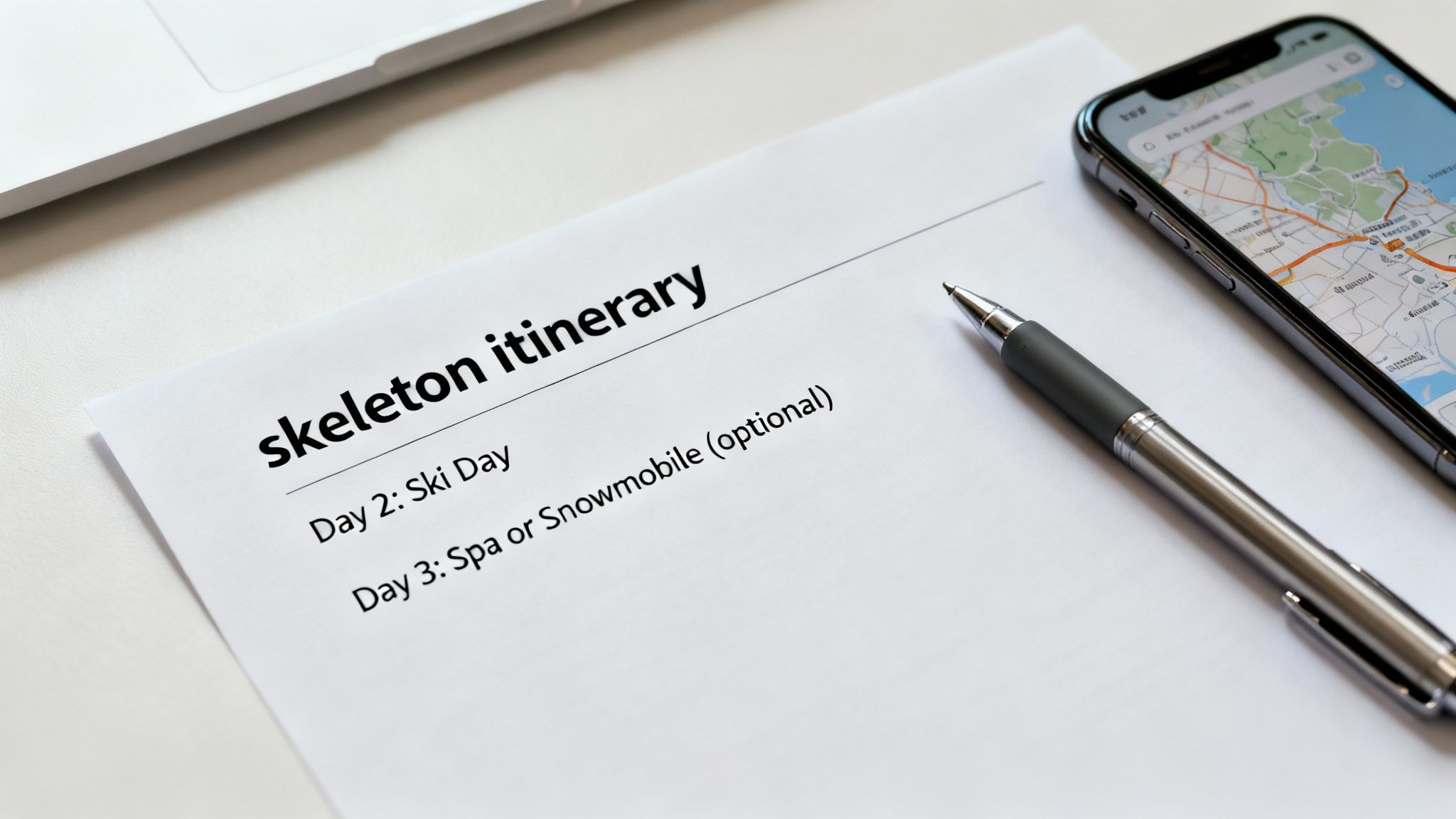
Let’s imagine a five-day getaway to Park City, Utah. Your skeleton itinerary might look like this: Day 2 is the big group ski day (your anchor). For Day 3, you present a few choices in the group chat. Maybe some folks want to join an early morning snowmobiling tour, while others vote for a leisurely brunch on Main Street followed by a spa appointment. Everyone gets to craft their perfect day, and then you all regroup for a cozy dinner to swap stories. It’s the best of both worlds!
This structure is a game-changer. It prevents introverts from feeling overwhelmed and extroverts from feeling bored. It gives everyone the autonomy to craft a vacation that truly feels like their own, even within a group setting. For more inspiration on destinations that naturally lend themselves to this balanced style of travel, you can find some fantastic ideas in our guide to the best family reunion destinations.
Sample 5-Day Itinerary Structure
To help you visualize this, here’s a template for what a flexible five-day plan could look like for a trip to a charming city like Savannah, Georgia. Notice how it’s less about a strict schedule and more about a fun, flexible flow.
| Day | Morning Activity | Afternoon Activity | Evening Activity |
|---|---|---|---|
| Day 1 | Group Arrival: Check into your historic Airbnb, drop the bags. | Low-Key Exploration: A casual stroll through Forsyth Park to soak in the Spanish moss vibes. | Welcome Dinner: Low-country boil at a relaxed, family-style spot. |
| Day 2 | Anchor Event: Guided historical trolley tour of the city. | Anchor Event Continued: Exploring the historic riverfront, popping into shops. | Free Evening: Everyone is on their own. Some might do a ghost tour, others hit a rooftop bar. |
| Day 3 | Optional Activities: Offer choices! A food tour of the city’s best bites, or a visit to Bonaventure Cemetery. | Free Time: Personal downtime for naps, reading, or solo exploring the City Market. | Group Dinner: A fun, casual meal at a lively restaurant to reconnect. |
| Day 4 | Free Morning: Let everyone enjoy a slow start with coffee and beignets from a local café. | Optional Activity: A smaller group trip out to Tybee Island for some beach time. | Anchor Event: Farewell dinner at a celebrated Southern restaurant. |
| Day 5 | Group Breakfast: One last meal together, maybe brunch! | Departures: Check-out and head home, full of grits and good memories. |
This framework shows how you can plan a group trip that feels both organized and liberating. You have your key shared moments—the welcome and farewell dinners, the big Day 2 adventure—but they are perfectly balanced with ample free time and choice. This thoughtful approach ensures everyone comes home energized and happy, not in need of a vacation from their vacation.
Navigating Group Bookings and Logistics
Alright, your skeleton itinerary is looking fantastic—a perfect mix of planned fun and free time. Now it’s time for your designated “Logistics Wizard” to step up and turn that beautiful blueprint into a booked-and-paid-for reality. This is where plans become plane tickets and dream stays become confirmed reservations.
This part of the process is all about making swift, smart decisions. With the group’s blessing on the major details, the Logistics Wizard can pounce on the best deals before they disappear. Think of it as a treasure hunt where the prize is a flawlessly executed trip.
Scoring the Best Flights and Stays
When you’re booking for a group, you’re not just booking travel; you’re wrangling a whole mess of preferences and schedules. The real trick is finding options that strike the right balance of price, convenience, and overall vibe for everyone involved.
For flights, Google Flights is your best friend, hands down. Set up alerts for your desired routes and dates. The tool will watch prices for you and ping you when they drop, so you can snag a great deal without compulsively refreshing the page.
When it comes to where you’ll all crash at night, you generally have two main paths to choose from:
The Big House (VRBO/Plum Guide): Renting a large house gives you an incredible communal space. Think late-night snacks in a shared kitchen, game nights in the living room, and just the general feeling of being together under one roof. It’s also often more cost-effective for bigger groups and creates that cozy, home-away-from-home atmosphere.
The Hotel Block: Booking a block of rooms at a hotel offers more personal space and amenities. Everyone gets their own room (and bathroom!), plus you might get perks like a pool, gym, or daily breakfast. Hotels are a great fit for groups where people appreciate having a private retreat to escape to.
The right choice really just depends on your group’s personality. A tight-knit crew on a reunion trip might love a big VRBO, while a group of friends with different sleep schedules might be happier with the independence of hotel rooms.
Your Central Command Center
If you take one piece of advice from this section, let it be this: create a centralized document. Seriously, this is non-negotiable. A shared Google Doc or Sheet is the perfect way to build a “master logistics hub.”
This document should be the single source of truth for every critical detail of the trip. No more frantic scrolling through a month’s worth of group chat messages to find a confirmation number.
Your logistics hub must include:
Flight Details: Airline, flight numbers, arrival/departure times, and confirmation codes for every single person.
Accommodation Info: The full address, check-in/out times, booking confirmation number, and any special instructions (like a quirky lockbox code).
Transportation Logistics: Confirmation for rental cars, airport shuttles, or passenger vans, including the company’s name and contact info.
Activity Bookings: All confirmation numbers and start times for any pre-booked tours, dinner reservations, or excursions.
Creating a central document isn’t just about being hyper-organized; it’s about empowering the whole group. Anyone can pull up the address for the rental car company or double-check their flight time without having to ask the trip planner for the hundredth time.
Nailing the On-the-Ground Travel
So, how is everyone getting from the airport to that awesome mountain cabin you booked? Don’t leave this to chance. Arranging ground transportation in advance is a massive stress-reliever.
If you’re flying in, booking a private airport shuttle that can fit your whole crew is a brilliant move. It ensures everyone arrives together and no one gets lost trying to navigate a new city’s rideshare scene. For trips that involve a lot of driving, renting a 12- or 15-passenger van can be both fun and practical, turning every drive into a mini road trip.
Acting decisively here is more important than ever. Recent data shows that group travel is booming, with bookings growing by about 21% in early 2025 compared to the previous year. At the same time, last-minute planning is surging, which means the competition for flights and lodging is fierce. Your Logistics Wizard needs to be ready to secure these bookings before they’re gone. Learn more about how booking trends are shaping group travel.
When to Partner With a Travel Pro
Let’s be real for a second: planning a group trip can sometimes feel like trying to herd cats. Through a maze. On fire. While the DIY route is an adventure in itself, there are moments when calling in a professional is the smartest, most stress-free move you can make. This is especially true when things get complex, the group gets big, or it’s a true once-in-a-lifetime kind of trip.
Think of a travel consultant not as a simple booking agent, but as your trip’s fairy godparent. They’re the logistics coordinators, expert problem-solvers, and—most importantly—the curators of exclusive experiences you just won’t stumble upon with a Google search. They make the magic happen behind the scenes so you don’t have to.
When an Expert is a Game-Changer
Certain trips have so many moving parts that professional help becomes less of a luxury and more of a necessity. If you find yourself nodding along to any of these scenarios, it might be time to bring in a pro.
A travel consultant can be your secret weapon when:
You’re planning a niche adventure: Think a multi-day ski trip hopping between different resorts, a deep cultural immersion in a remote village, or a wildlife safari in the Serengeti. Experts have cultivated relationships with trusted local guides and partners, which is your ticket to an authentic and seamless experience.
Your group is extra large: Trying to coordinate for 15+ people? A pro can negotiate group rates on flights, secure blocks of hotel rooms, and charter private transportation, saving you a metric ton of money and an even bigger headache.
The stakes are incredibly high: For milestone celebrations like a 50th birthday bash in Tuscany or a multi-generational family reunion, you need everything to be perfect. An expert takes on that pressure, letting you focus on what really matters—making memories.
The real value of a travel pro isn’t just in what they book; it’s in the problems they solve before you even know they exist. They anticipate the logistical hurdles and smooth them out, creating a truly effortless journey for your entire group.
Unlocking a World of Perks
Beyond simplifying logistics, working with a travel consultant unlocks a level of access and perks that can elevate your trip from great to completely unforgettable. They have the industry connections to pull strings you can’t. This could mean nabbing a reservation at that restaurant with a six-month waitlist or arranging a private, after-hours museum tour. It’s about access.
This professional touch is becoming even more critical. The global group travel market was pegged at around $369.8 billion in 2024 and is on a serious growth trajectory. That boom means more competition for the best hotels, guides, and tours, especially during peak seasons. A consultant’s insider knowledge helps you cut through the noise and lock in top-tier options before they’re gone. You can get more insights on the expanding group travel market to see why this is a growing advantage.
If your dream trip feels a bit too big to tackle on your own, don’t hesitate to reach out. You can start a conversation about your custom group itinerary and see just how an expert can turn your complex vision into a flawless reality.
Common Group Travel Questions
Even the most meticulous planners run into a few road bumps. It just comes with the territory. Here are a few of the most common hurdles you’ll face when getting a group trip off the ground, plus some tried-and-true advice to keep things from going sideways.
How Should We Handle Group Payments?
Money can get awkward fast. To avoid it, have your “Budget Guru” handle all the major upfront bookings—we’re talking accommodations, big tours, maybe even flights. Everyone else can immediately pay them back with apps like Venmo or Zelle. You get a clean, digital paper trail, and no one is left holding the bag.
Once you’re on the road, an app like Splitwise is an absolute game-changer for tracking all those little shared expenses. Groceries, taxi rides, rounds of drinks… just log it and the app does the math. Settling up at the end of the trip is completely painless. For an extra layer of clarity, a simple shared spreadsheet listing who paid for what is never a bad idea.
How Do We Pick a Destination Everyone Likes?
The “where should we go?” debate is a legendary trip-killer. Don’t fall into the trap of an endless, open-ended group chat discussion. It’s a recipe for disaster.
Instead, the trip leader should do a little homework and come up with a pre-vetted list of four to five solid options that actually fit the group’s vibe and budget. Present those to the group, then use a simple polling tool like Doodle or the poll feature in your chat app. Have everyone vote for their top two choices. The destination with the most votes wins. It’s democratic, decisive, and it stops the back-and-forth cold.
How Far in Advance Should We Plan?
This one is all about context. If you’re planning a big international adventure or traveling during a peak season (think holidays or spring break), you need a long runway. Start the planning process 9-12 months ahead. Seriously. This gives you the best shot at scoring reasonable prices and having your pick of flights and places to stay before they get snapped up.
For domestic trips or getaways in the off-season, you can be a bit more relaxed. A 4-6 month window usually works just fine. But here’s the golden rule: the bigger the group, the earlier you need to start. Juggling a dozen schedules and finding lodging for a large crew adds layers of complexity you need time to navigate.
Feeling like your group’s dream trip could use a professional touch to handle all the details? The team at Those Who Wander, LLC specializes in crafting custom itineraries that turn your ideas into seamless, unforgettable adventures. Let’s plan your next adventure.
Pingback: 12 Memorable New Year's Traditions Around The Globe To Experience In 2025
Pingback: Best Travel Insurance for Families--Wanderer's Journal
Pingback: Snow Much Fun--Best Ski Resorts for Families
Pingback: How to Plan a Ski Trip - Wanderer's Journal
Pingback: Those Who Wander, LLC